- Legal Education and Access Portal

The 27th Amendment: The End of Judicial Independence in Pakistan?
The 27th Amendment to the Constitution of Pakistan, passed in November 2025, is a major constitutional package that changes the balance of power among state institutions. Officially, it was presented as a reform to improve governance, strengthen national defense, and streamline judicial processes. However, when examined closely, it becomes clear that the amendment centralizes authority, reduces judicial oversight, and restructures institutional control. Constitutional theory recognizes that modern constitutions must adapt to evolving governance challenges, but such adaptation must remain consistent with constitutional limits and accountability.
The recent resignations of senior judges from the Supreme Court and one from the High Court reflect deep discomfort within the judiciary. Such resignations are rare and clearly indicate that the amendment is not seen as ordinary constitutional change. Their collective departure signals that the amendment compromises judicial independence and disrupts the balance of institutional power. The creation of the Federal Constitutional Court (FCC), with powers surpassing those of the Supreme Court, is being presented as reform. In reality, it is a restructuring of judicial authority. In established democracies, constitutional courts are designed to strengthen judicial review rather than weaken existing oversight mechanisms.
Think for a moment why people desperately want to leave Pakistan. Where the rule of law weakens, constitutional rights become meaningless. The Constitution guarantees equality before law, dignity, and fair trial. But without judicial independence, these rights lose meaning, leaving citizens exposed. Legal scholar Raza evaluates that when judicial oversight is reduced in the name of reform or efficiency, constitutional rights exist only on paper and fail in practical enforcement.
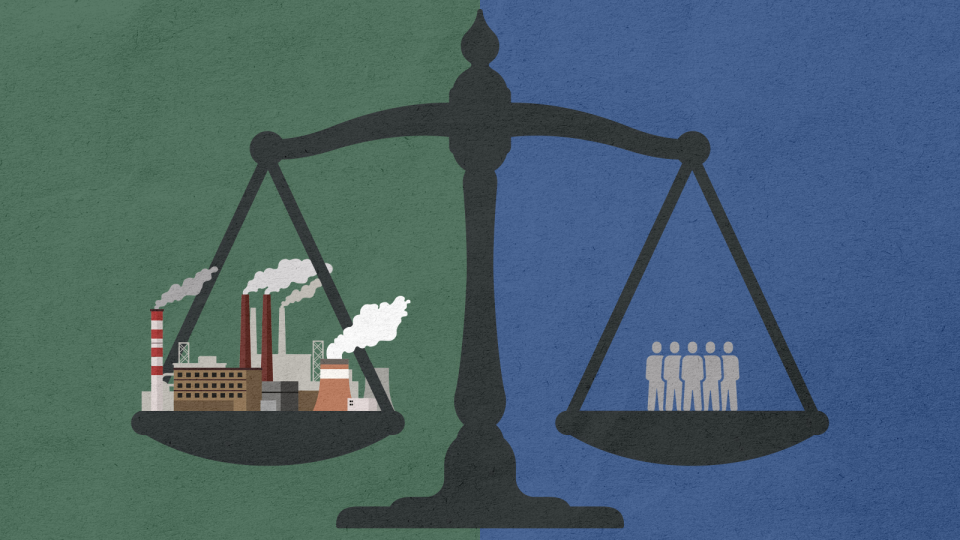
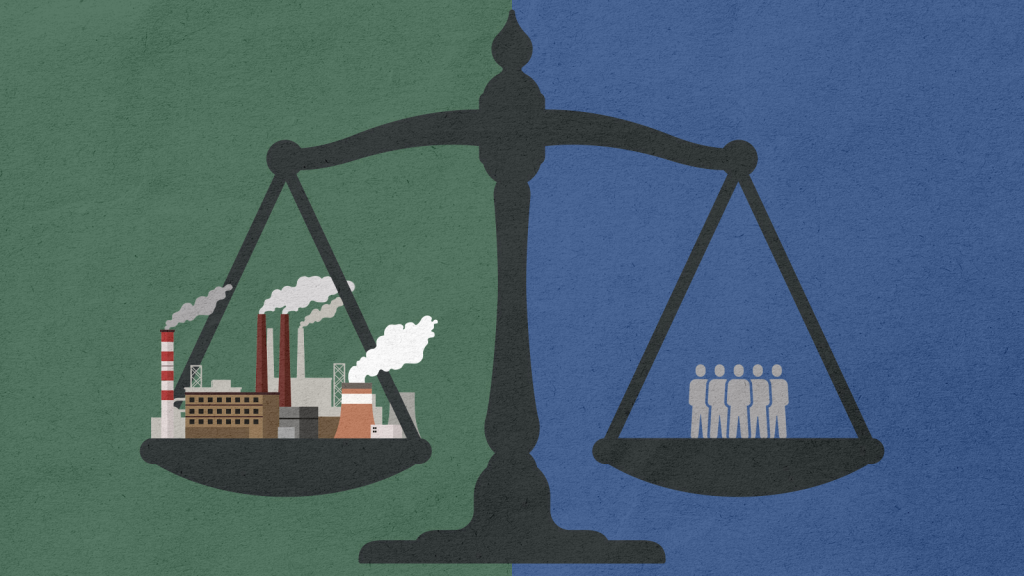
The concentration of power within a single institution is problematic. This is not to suggest that such institutions lack the authority to introduce constitutional amendments; they do possess that power. However, justice cannot be compromised in the process. As A.V. Dicey argues, the rule of law requires that all governmental authority remain subject to judicial control; otherwise, constitutional guarantees become merely symbolic rather than enforceable protections. Under the 26th Amendment, judicial oversight was preserved, ensuring a balance of authority. In contrast, the 27th Amendment reflects a shift where accountability is weakened, resulting in a compromise on justice.
The amendment also increases central interference in governing departments, weakening their autonomy. When every institution is indirectly controlled by one center, true accountability disappears. Montesquieu’s theory of separation of powers warns that liberty is endangered when legislative, executive, and judicial authority are concentrated in a single center of power. Departments cannot function freely, transparency is reduced, and efficiency collapses. Public trust declines because decisions are no longer perceived as neutral or fair.
From a constitutional perspective, amendments are meant to strengthen rights and institutions, not restrict them. Any amendment that weakens judicial review or undermines checks and balances becomes constitutionally unsafe. Instead of protecting fundamental rights, the 27th Amendment indirectly restricts them by disabling the very institution responsible for their enforcement. Sustainable governance reforms must reinforce oversight rather than concentrate authority.
Beyond institutional design, the long-term democratic implications of the 27th Amendment must also be considered. Constitutional change does not operate only at the level of legal text; it reshapes political culture and public expectations about accountability. When citizens perceive that courts no longer function as neutral arbiters, faith in lawful remedies declines. Disputes that should be resolved through constitutional mechanisms instead move into the streets, social unrest increases, and governance becomes dependent on coercive authority rather than consent. In this sense, weakening judicial independence is not merely a legal adjustment but a structural risk to democratic stability itself.
Historically, the judiciary in Pakistan has played a complex yet significant role in checking excesses of power, even if imperfectly. Public interest litigation, constitutional petitions, and suo motu jurisdiction have often provided citizens with avenues to challenge executive overreach. Curtailing this oversight narrows the space for constitutional dialogue between the state and its people. If the Federal Constitutional Court is staffed or influenced through centralized appointments without meaningful safeguards, its decisions may be perceived as politically aligned rather than legally grounded. The appearance of partiality alone can be as damaging as actual interference, because legitimacy depends on public confidence.
Moreover, comparative constitutional experiences demonstrate that concentrating authority in the name of efficiency rarely produces sustainable governance. States that weaken judicial review often achieve short-term administrative control but suffer long-term institutional fragility. Strong democracies, by contrast, accept slower processes precisely because deliberation, review, and dissent protect against arbitrary power. Efficiency cannot substitute for justice; it must operate within it. A system that prioritizes speed over safeguards risks normalizing executive dominance and eroding constitutional culture.
Therefore, the debate over the 27th Amendment is not solely about legal technicalities or institutional hierarchy. It is fundamentally about whether constitutional governance in Pakistan will remain grounded in checks and balances or transition toward centralized control where rights depend on discretion rather than law.
In conclusion, while the 27th Amendment was introduced with claims of structural reform, its consequences raise serious constitutional concerns. If justice becomes uncertain and accountability collapses, constitutional security itself is placed at risk. Although the referenced scholarship originates from a comparative constitutional context, it is cited strictly as a theoretical framework to illustrate constitutional evolution and judicial interpretation of rights, not to apply foreign law to Pakistan’s constitutional system.
When authority outweighs justice, are we living freely or under control?
Bibliography:
Raza, A.
Asad Raza, Artificial Intelligence, National Security, and Constitutional Governance in the United States: Reinventing the Rule of Law in the Digital Age (Geh Press 2025)
Dicey, A. V.
AV Dicey, Introduction to the Study of the Law of the Constitution (10th edn, Macmillan 1959)
Montesquieu, C. de S.
Charles de Secondat Montesquieu, The Spirit of the Laws (Cambridge University Press 1989)
The opinions expressed in this article are the author's own and do not reflect the views of LEAP Pakistan or Pakistan College of Law.