- Legal Education and Access Portal

Social evils-will blame be the perennial resolve?

Our culture is at a critical cusp- a time that requires that we define what it means to be a citizen in a democracy. Within our nation we need to foster a greater sense of collective responsibility, said: Robert Nelly Bellah.
It is very unfortunate that even after more than half a century of independence, we are still gripped by a number of deadly social evils which have been institutionalized. Carriers of such evils are humans, the subjects of this society. Social evils are issues that directly or indirectly affect one or more members of society thus harming the welfare of that society. As societies house the building blocks of states, such social evils can be destructive to the peace and harmony of a state as a whole. They break down the moral values of a society, ethnicity and writ of law in a country through economical and social means.
It is therefore necessary to eliminate the things that have discolored our society. Stains like injustice and lawlessness, nepotism or favoritism, bribery, loss of quality and standard, intolerance, adulteration, exploitation, injury and death by accidents in our society has now become part of our public and official functionaries.
The transport system in Pakistan is an excellent case in point. Serving a population of over 180 million, the transportation system in Pakistan is still in its developmental stages. It has not yet achieved the requisite maturity as compared to more advanced nation states of the world, like the US, the UK, China, Japan, and Germany. Owing to various structural, developmental, management and organizational issues, the situation on the roads is getting worse. Traffic jams and fatal road accidents have become an oft-witnessed consequence across majority of the roads loaded with heavy traffic. Such unfortunate incidents not only result in the loss of precious public property, but also claim the lives of many innocent citizens.
The biggest problem with our national transportation mechanism is that of the flawed infrastructure which falls very short of meeting the growing demands of the ever increasing traffic pool on the roads. Every year, a fairly large number of new vehicles are thrust to the already overburdened network without creating extra capacity in it for accommodating the influx. The obvious outcome of such a structural deficiency is the miserable scene that you often happen to witness around you.
Another serious problem encountered by the public on the roads is that of the poor quality and lack of durability of the construction work. This is partly owed to the insufficiency of developmental funds and partly due to the negligence observed on the part of the contractors. The construction companies that undertake such projects make use of less durable material and inappropriate engineering techniques to save some extra cash. That is why majority of the roads in the country are almost always seen to be under construction. It, in reality, not only causes loss to the economy but also poses serious hindrance to the traffic flow, often leading to gruesome accidents.
But this is the view of only one side of the coin. We, the people residing within the country, who make use of these facilities also have made our fair share of contributions towards the accumulating social evils. This includes the technically flawed establishments like the transport system. A majority of the unwanted incidents occurring on the roads are caused by hasty, unruly and risky driving practices. People get driving licenses through the recommendations of influential people i.e. their favorite patronizing authorities, without even getting prior training. Such ill-trained drivers not only feed the circle of regenerating social evils but also make fatal mistakes, thus putting into danger their own lives as well as those of other innocent citizens sharing the common route. This is reciprocated by the pedestrians who ignore traffic rules applicable to them and make haste while crossing the road from any point they find feasible for themselves.
Corruption is considered to be one of the most heinous issues that are threatening our national peace and prosperity. Mismanagement is also posing a serious obstacle in the way to the ultimate prosperity of the country. Both of these social evils have also deeply penetrated in the traffic police department. The officials assigned with the task of enforcing traffic laws often let the laws be broken in exchange for a little monetary benefit. When drivers are caught violating the rules, they offer a proportion of Challan fee as bribe and escape the legal punishment.
Increasing environmental pollution and consequent global warming have become a topic of concern for all. In the Pakistani perspective, the condition has attained more gravity. Owing to the lack and inadequacy of checks and balances in the country, vehicles are often seen emitting large quantities of hazardous smoke. The burden of this social evil’s existence is again shared by both; citizens and the government officials. The vehicles owners do not pay due heed to the maintenance of their automotives and inflict the public, especially roadside dwellers, with grave consequences for their health. It is not just the smoke that causes trouble; noise pollution is equally painful and deserves considerable attention. When noise exceeds certain bearable level up to 160db, it is likely to result in deafness.
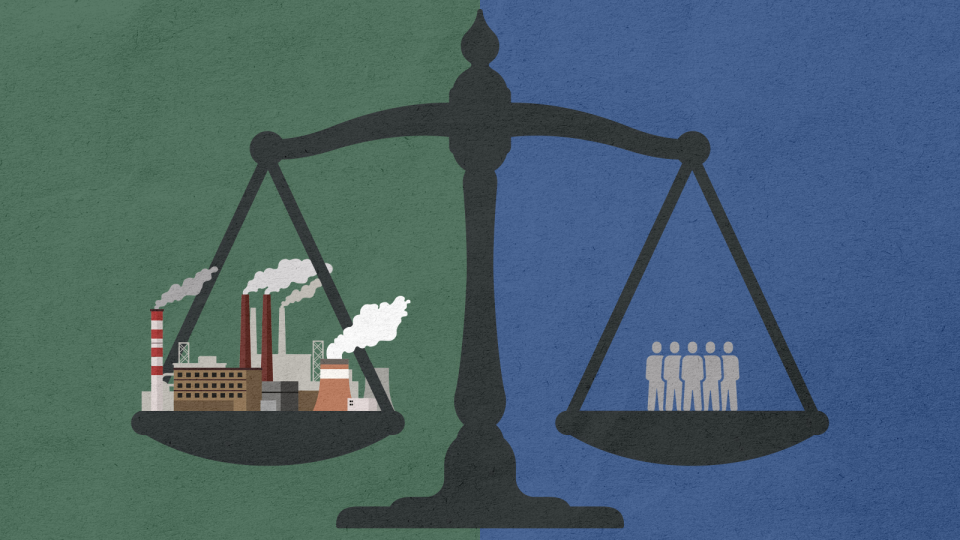
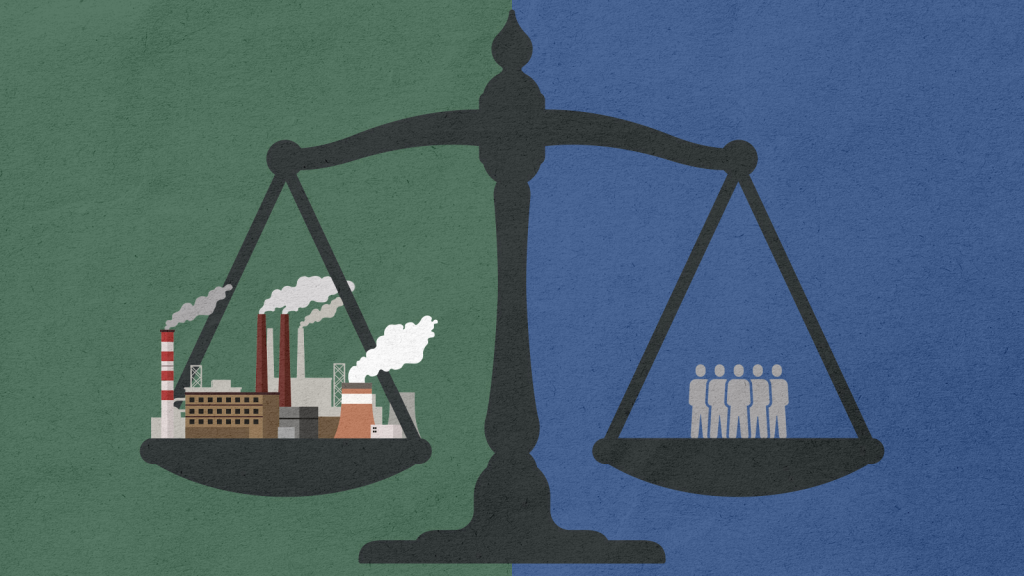
Despite the obvious reciprocity (between those holding the power and those subjected to this power) which allows for the existence and continuation of social problems only one reaction comes to the fore which is familiar to both segments of society. That is of blame. The state officials blame state subjects to lack the requisite practical obedience to the laws and rules enunciated to ensure that the affairs of the state run smoothly. The state subjects in turn blame state officials to not fulfill their duties completely- to ensure that the systems put in place lack technical errors. By using the example of the transport system above it is seen that the problem lies at both ends, with both groups. Yet one group blames the other and vice versa.
So is blame to be the perennial resolve? Will it always be the tool we use to ease our guilt, or frustration regarding the persistence of social problems? Will we always continue to participate in this futile game of ping pong with blame? Because this has only led to the persistence of the same problems. In fact this has also allowed all pre-existing problems to pave the way for new ones as a consequence, worsening the poor conditions in effect.
Although history has shown that this is what we have always done as a collective exercise the future needs to diverge from this practice of we are to ever move on as a society divorced from such social problems. In order for this to happen every group need to stop focusing on deflecting responsibility and own up to their own actions. This will not only allow for an effective elimination of social evils currently vested within our society but will also prevent the further production of new ones.
The Punjab Government is establishing an authority where it would place officials of different departments concerned to run an integrated traffic system initially in Lahore and later, over the entire province.
Currently, eight departments are tasked with the management of roads and traffic. Authority would have members from the Home, Transport and Excise departments, Traffic Police, DCO, Traffic Engineering & Transport Planning Agency (TEPA) and Lahore Parking Company (LPC). The placement of all officials will be under one roof and this authority would handle traffic tickets, fine collection, NOC for new projects, insurance certifications and motor vehicle registration.
Under the plan, the data base of excise and taxation would be integrated with the law-enforcement agencies helping them extract the information of owner of the escaped vehicle through it. An amendment would be made in Motor Vehicles Ordinance of 1965, through which camera integrated fine could be issued to the owner’s house. The traffic wardens would be given handheld cameras through which they would take the picture of the violation like red light jumping, illegal parking etc.
Citizens would be provided with a convenient method for payment of their fines which includes payment through ATM’s, KIOSKS and Online. Fine would be attached to the number plate which could belong to the owner of the vehicle rather than the vehicles itself. And every resale of the vehicle would require issuance of a new number plate to the new owner and expunging of the old plate that belonged to the previous owner. The vehicle shall be allowed to be sold only after payment of all fines imposed on it.
This shows there to be initiative undertaken by the government to try and address the problems plaguing the transport system in Pakistan. State subjects should realize this to be a great opportunity to reciprocate with sufficient enthusiasm and stop resorting to blame as a resolve. This is likely to result in the success of this attempt to fix the transport system by utilizing the instrument of collective responsibility. This will allows us all, as the members of this society, to experience the change we can bring about by eschewing blame.
The opinions expressed in this article are the author's own and do not reflect the views of LEAP Pakistan or Pakistan College of Law.