- Legal Education and Access Portal

The incorporation of the Lahore Resolution into the Constitution of Pakistan
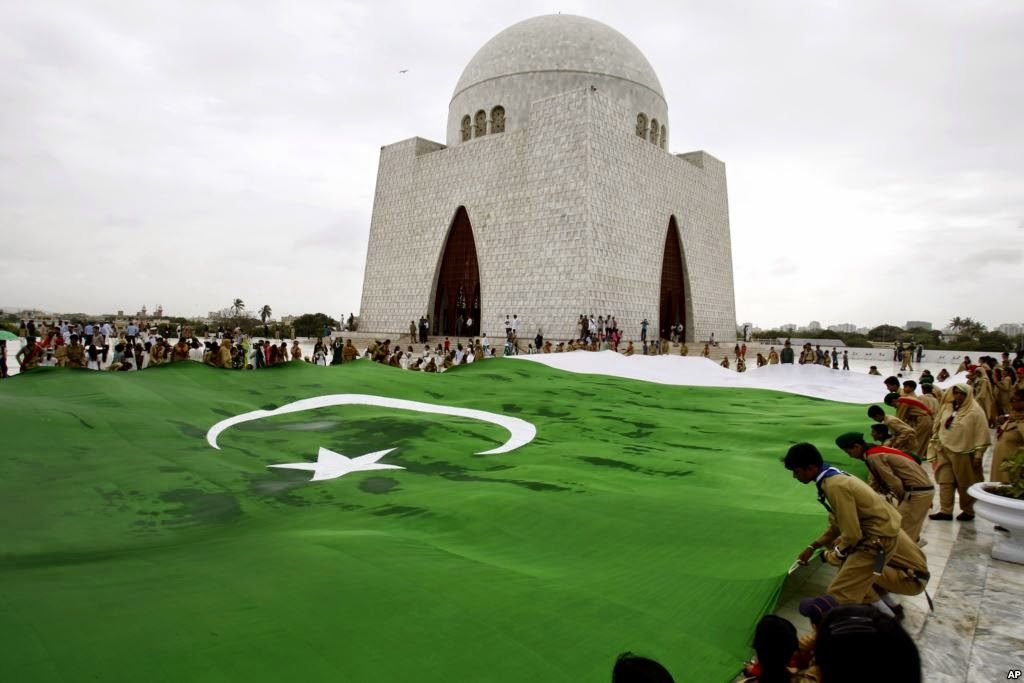
23rd March is here and Pakistanis have dived into a four day long weekend. The usual celebrations of Pakistan Resolution (originally called Lahore Resolution) are being carried out in their routine fashion. Parades are being conducted by the Armed Forces, Pakistani print media has published stories of Independence, and chants of national anthems have been heard all day long. These things are necessary to boost the morale of this terror stricken nation but we need to feel no shame in accepting that we have reached epitome of indifference with our history. We have read the selected text of the declaration in our books and some of us know what it says but we don’t know what it means. I am reproducing the actual text of the declaration here. It runs as:
The Lahore Resolution
March 23, 1940 – Lahore
“While approving and endorsing the action taken by the Council and the Working Committee of the All India Muslim League, as indicated in their resolutions dated the 27th of August, 17th & 18th of September and 22nd of October, 1939, and the 3rd of February, 1940 on the constitutional issue, this session of the All India Muslim League emphatically reiterates that the scheme of federation embodied in the Government of India Act 1935 is totally unsuited to, and unworkable in the peculiar conditions of this country and is altogether unacceptable to Muslim India.
It further records its emphatic view that while the declaration dated the 18th of October, 1939 made by the Viceroy on behalf of His Majesty’s Government is reassuring in so far as it declares that the policy and plan on which the Government of India Act 1935 is based will be reconsidered in consultation with various parties, interests and communities in India, Muslims in India will not be satisfied unless the whole constitutional plan is reconsidered de novo and that no revised plan would be acceptable to Muslims unless it is framed with their approval and consent.
Resolved that it is the considered view of this Session of the All India Muslim League that no constitutional plan would be workable in this country or acceptable to the Muslims unless it is designed on the following basic principles, viz., that geographically contiguous units are demarcated into regions which should be constituted, with such territorial readjustments as may be necessary that the areas in which the Muslims are numerically in a majority as in the North Western and Eastern Zones of (British) India should be grouped to constitute ‘independent states’ in which the constituent units should be autonomous and sovereign.
That adequate, effective and mandatory safeguards should be specifically provided in the constitution for minorities in these units and in the regions for the protection of their religious, cultural, economic, political, administrative and other rights and interests in consultation with them and in other parts of India where the Muslims are in a minority: adequate, effective and mandatory safeguards shall be specifically provided in the constitution for them and other minorities for the protection of their rights and interests.
The Session further authorized the Working Committee to frame a scheme of constitution in accordance with these basic principles, providing for the assumption finally by the respective regions of all powers such as defense, external affairs, communications, customs, and such other matters as may be necessary.”
Encapsulating facts of the Lahore session are interpreted hereafter. 27th Annual Session of the Muslim League which was originally scheduled for 28-30 December, 1939, convened on 22nd March1940. Jinnah was unanimously elected as the president for the Lahore session. Muslim leaders from all over the India attended this epoch making session. According to a rough estimate, around 100,000 people attended this grand public meeting. Jinnah made an extempore speech which lasted for about hundred minutes. Among many other core propositions, he discussed the constitutional issues of India. He stressed that Muslims were a nation by any definition. He verbalized that, ‘what the unitary government of India for 150 years failed to achieve cannot be realized by the imposition for a central federal government’. [1] He reiterated that, ‘We wish to live in peace and harmony with our neighbors as a free and independent people’. [2] The resolution was presented by Sher-e-Bangal A.K. Fazlul Haq on 23rd March 1940 and was passed undisputedly on 24th March 1940 in a huge round of applause after long discussions and debates of the participants of the Session.
Leadership of the Muslim League knew that in order to attract attention of the International polity they needed to put their demands in a concise manner. The Lahore Resolution consisted of five paragraphs and each paragraph had a distinctive theme. The declaration focused on the political and constitutional complexities and answered in the light of the international political system. Though it did not mention the name of Pakistan anywhere in the declaration but it entailed all the essential elements of a modern day State. It proposed Muslim population of the subcontinent and minorities of the Muslim majority zones as the people of Pakistan. It furnished territorial basis to the idea of Pakistan by demanding that geographically contiguous units be demarcated into regions to form zones of independent state. It envisaged the modern democratic state and provided the constitutional structure of Pakistan by putting their confidence in federation consisting of autonomous zones. Above all, it not only implored for separate land but independent and sovereign land, which will be free to determine its constitutional path and rejected any form of interference and suppression. Dr. Waheed-uz-Zaman writes in his book entitled ‘Towards Pakistan’, “The Lahore Resolution was inspired by mixed motives in the minds of those who framed it but there can be no reasonable doubt that it was presented as a practical solution of the communal problem”. The Resolution envisaged a republic democratic State where minorities were given the equal status and their rights were as sacred as rights of the Muslims. It demanded constitutional protections and safeguards for the minorities.
This defined the ultimate goal of the Muslim League and streamlined their future endeavors with the destination of a separate homeland. However, it also stirred some controversies. Debates were made contesting why the word ‘Pakistan’ was not used in the Declaration. The word ‘Pakistan’ was coined long before the declaration and had gained popularity worldwide. Even the Indian and the international print media described the declaration as Pakistan Resolution and till now we commemorate it as Pakistan Resolution. Many people argued that the term ‘Independent States’ represented that the founding fathers of the Lahore declaration desired more than one independent state for Muslims of the sub-continent. Instead of concentrating only at that extra ‘s’ with State, if we read the third paragraph in its entirety along with contextual history and with the scheme of the declaration we will know that ‘be grouped to constitute independent states’ meant that founding fathers of this document have foresighted the constitutional system for their separate land, they had the idea of confederacy or federacy.
The Resolution which can be termed as founding document of Pakistan has now been long forgotten. We mistakenly understood that it had served its purpose when Pakistan came into being. This declaration did not only profess the demand of an independent sovereign state for the Muslims, it also enshrined the political and constitutional discourse for Pakistan which still remains unaccomplished. It contemplated federal form of government with absolute autonomy for the federating units. But to-date we have not achieved this.
This struggle for provincial autonomy dates back to the Mughal era but First formal demand for provincial autonomy in sub-continent was made in resolution of 1924 by the All India Muslim League. Later, the demand for federalism and provincial liberty was made more politically robust under the famous 14 points by the Quaid-e-Azam and the Allahabad address of Sir Allama Mohammad Iqbal in 1930 articulated vision of Muslim League regarding federal structure and voiced for independent states in Muslim majority provinces. British Government tried to address the demand for provincial autonomy in The Government of India Act, 1935, which is supposedly the most comprehensive legislation by the British Government in United India and introduced the federal system with a degree of provincial autonomy. For the first time provinces in India were given the status of separate entities. However, the Federal System introduced by the Act of 1935 was defective in many ways. There was no guarantee of individual liberties neither it could give a workable dominion status. Vast authority was given to the Governors in the provinces and to the Viceroy in the Centre which was against the principle of democracy and provincial autonomy.
The first practical demand for provincial independency was made at conference of the Sindh Muslim Provincial League in 1938. Under the leadership of Jinnah, Muslim League reiterated their demands in the session of working committee held in first week of February, 1940. They asserted that Muslim Majority Zones of India should be constituted into independent dominions and should have direct relation with Britain Government. Furthermore, various units in each zone should form component parts of the Federation, in that zone as autonomous unit. These resolutions proved to be the forerunner of the historic Lahore declaration and Muslim League put forth their demand of provincial autonomy in black and white on 22nd March, 1940 and their continuing demands for strong provincial and weak central governments were in direct opposition to the 1935 Act. Though the word Pakistan was not used in the Lahore Declaration but Jinnah made it clear in November, 1945 that, “The theory of Pakistan guarantees that federal units of the National Government would have all the autonomy that you will find in the Constitution of the United States of America, Canada and Australia. But certain vital powers will remain vested in the central government such as Monetary System, National Defense and Federal responsibilities.”
Unfortunately, the struggle for provincial autonomy did not end with the movement of a separate homeland. Government of India Act 1935 which was despised by All India Muslim League became the interim Constitution with certain amendments. Under the 1935 Act, Pakistan had a federal but centralized system. Provinces were not made completely autonomous in that constitutional structure because the bureaucracy did not want to make Bengal powerful and self sufficient. Government of India Act, 1935 continued to be the law of the land till 1956. After nine years of constitutional endeavors, when Pakistan had Constitution of its own, it tried to soften the centralizing impact of the Government of India Act, 1935 under the Article 160(1), by reducing the central legislative list and 94 items were placed in Provincial list. Nonetheless, changes in legislative lists could not guarantee complete autonomy to provinces as Central has the overriding power in the matters of economic development, national defense and coordination among provinces. The 1956 Constitution was abrogated in 1958, and President Ayub established Constitution Commission in 1960. It strongly recommended for federal form of government with maximum autonomy given to federating units but Ayub’s interest lied in strong center. Resultantly, the 1962 constitution tilted the balance of power towards the federal government. Powers were reserved for federal government and residual powers were given to the provinces which undermined their autonomy. Unhappy with this situation, Awami League presented its Six Point Agenda which called for the absolute autonomy for the federating units with federal government holding only defense and foreign affairs. To the surprise of Central Government and West Pakistan Political parties, Awami league won the first general election of Pakistan in 1970 and the idea of Provincial autonomy was strengthened. Existing central government despised Awami League’s central government and adopted delaying tactics which resulted in violent conflicts. Bangladesh emerged as a country on the map of the world after the dismemberment of Pakistan in 1971.
The first unanimous constitution of Pakistan, the Constitution of Islamic Republic of Pakistan, 1973, also retained the federal structure and established institutions and made provisions to enhance provincial autonomy. To strengthen the spirit of autonomy, Senate and Council of Common Interest were established. Two legislative lists were incorporated: Federal and Concurrent list. Concurrent list provided opportunity for the provincial legislature to draft and pass laws. But the interests of the central government were made supreme and prevailing under Article 143. However, in terms of functioning of the Constitution, the Bhutto regime which drafted this document showed inkling for a stronger role of Central Government which created disgruntlement amongst the Baloch and Pashtun parts of the federating units. [3]
Time and again, the 1973 constitution has been amended to bring it in conformity with the Lahore Declaration’s demand of maximum provincial autonomy. 8th amendment of the Constitution did not have any direct nexus with the autonomy but it increased the Senate’s legislative powers and representation of provinces in the upper house which somehow gave greater powers to the smaller provinces in decision making. But the second Legal Framework Order, 2002 promulgated by General Pervaiz Musharaf tried to undermine the provincial autonomy by introducing Local Government. It was against the spirit of provincial autonomy as local governments started encroaching the space of provincial governments while being the creation of Central Government. The most recent effort to accomplish complete provincial autonomy was done in the historic 18th amendment of the Constitution in 2010. It gives greater provincial autonomy to provinces by abolishing the concurrent list and other related provisions. The 18th Constitutional Amendment potentially impacts the mandate of several Federal Ministries and by implication increases the roles and responsibilities of the related institutions and administrative structures at the provincial level. Provincial Governments also now have greater authority to raise domestic and international loans and give guarantees on the security of Provincial Consolidated Fund under Article 167 of the Constitution.
However, the amendment did not affect the autonomy of provinces equally. It favored the provinces having larger population and impliedly gives greater powers to larger provinces. What actually has happened under the 18th amendment that the central government has assumed the jurisdiction over most important subjects and let provinces have jurisdiction over less important subjects. On top of this, a provision (Article 143) that before 18th amendment allowed the federal government to enact laws only in the subjects covered under federal legislative and concurrent legislative list have been extended giving authority to the Federal legislature to void any acts passed by a Provincial Assembly. This means that an act passed by a provincial assembly in a subject area that is totally under the jurisdiction of the province can be voided by an act passed by the Federal legislature with simple majority. Before 18th amendment such an act would have required a constitutional amendment.
In a country such as Pakistan, where one province has more members in the National Assembly than the combined total of other provinces, gives the largest province of Pakistan to override any provincial laws with ease as it could easily muster simple majority from that province alone. [4] Since the inception of Pakistan, provincial autonomy has been a source of tension between Baluchistan and Central Government. This has resulted into the unrest among the people of Baluchistan and strengthened the Baluchistan Liberation Movement. Practically, not all the provinces have same level of autonomy.
The degree of provincial autonomy which the Lahore Resolution demanded still has not been given to the provinces. The revolutionary and democratic Resolution yet to be implemented in its full spirit is still a distant dream.
[1] Presidential Address of M.A. Jinnah, March 22, 1940, in Pirzada, ed., Foundation of Pakista, Vol.II, 299-311
[2]ibid
[3] Zubair Faisal Abbas, Federalism, Provincial Autonomy, and Conflicts
[4]ibid
The opinions expressed in this article are the author's own and do not reflect the views of LEAP Pakistan or Pakistan College of Law.