- Legal Education and Access Portal

Rethinking Liability for Artificial Intelligence and Autonomous Systems in Pakistan
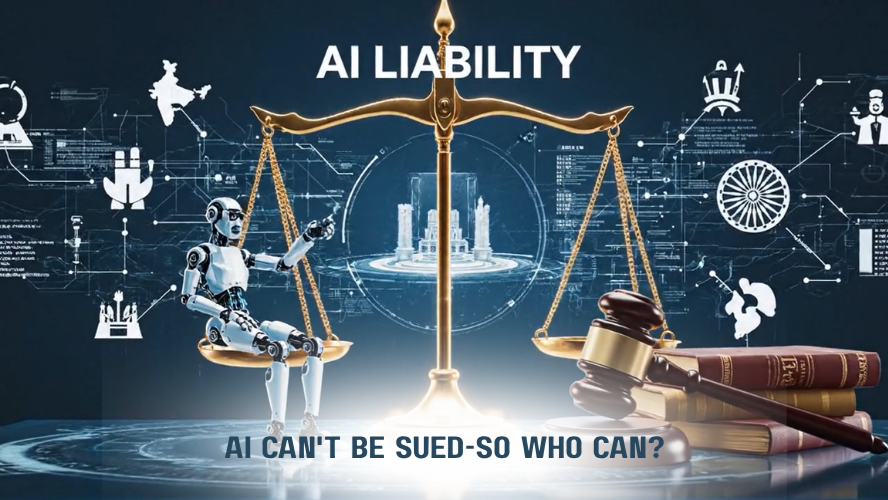
The advancement of modern technologies such as AI (Artificial Intelligence), drones, biometric systems, and algorithm-driven decision-making tools has significantly transformed societies. These technologies enhance safety and innovation, but at the same time introduce new forms of risk when accidents occur. In Pakistan, as these technologies take root, the question of legal responsibility in accidents involving emerging technologies presents a serious jurisprudential challenge. This opinion argues that legal reforms are required to address gaps in liability for technology-related accidents.
Emerging technologies differ from traditional tools because they operate with varying degrees of autonomy and learning capability. AI systems can evolve independently, autonomous vehicles make real-time decisions without human input, and automated platforms perform complex tasks based on algorithms. When accidents occur, for example, a vehicle collision involving an autonomous system or a drone crash causing injury, the central question becomes: who is responsible?
Traditionally, liability arises from negligence or intent. However, emerging technologies involve multiple actors, including manufacturers, programmers, data providers, operators, and platform owners. This diffusion of control makes it difficult to attribute responsibility, exposing limitations in existing legal doctrines. Pakistan lacks a specialised statutory regime governing liability for emerging technologies, although courts may rely on general legal principles.
The first general framework is found in the Pakistan Penal Code 1860 (PPC), which contains provisions relating to rash and negligent acts. Although there is no explicit provision addressing emerging technologies, certain sections may be relevant. Section 279 PPC (rash driving or riding on a public way) may apply in cases involving negligent operation of autonomous or semi-autonomous vehicles where human supervision is involved. Section 285 PPC concerns negligent conduct with respect to fire or combustible matter, which may be relevant in cases involving hazardous technological equipment, such as defective lithium batteries. Sections 337-A to 337-H PPC deal with causing hurt and may apply where technology causes bodily harm. Section 34 PPC provides for joint liability where a criminal act is done by several persons in furtherance of common intention. However, these provisions were drafted for human conduct and do not directly address autonomous systems.
The second relevant statute is the Contract Act 1872. Section 73 provides for compensation for loss or damage caused by breach of contract, which may apply where a software system or automated machine fails to perform as promised. Sections 188, 237, and 238 address principles of agency. However, an AI system cannot itself be treated as a legal person or agent because it lacks legal personality. Therefore, liability would generally fall upon the developer, operator, or contracting party. Where an accident results from a defect, flaw, or bug, liability is more appropriately grounded in negligence or product liability principles rather than purely contractual breach.
The Fatal Accidents Act 1855 provides a civil remedy where death is caused by a wrongful act, neglect, or default. In the context of emerging technologies, liability may arise against manufacturers, operators, or service providers if their negligence leads to a fatal accident. Damages are awarded based on the financial loss suffered by dependants, such as a spouse, parent, or child.
Negligence remains the primary basis for civil liability in Pakistan. To establish negligence, a claimant must prove a duty of care, breach of that duty, causation, and damage. In cases involving emerging technologies, identifying the correct party owing a duty of care is particularly challenging. For example, if an autonomous delivery drone malfunctions and falls on a pedestrian, liability may arise against the operator, manufacturer, or software developer. Proving breach may require technical evidence beyond the reach of ordinary litigants, limiting access to justice and compensation.
Strict liability, where fault need not be proven, has been recognised in Pakistan in cases involving hazardous activities. Emerging technologies such as particularly autonomous vehicles and AI-driven medical devices may arguably fall within this category due to their inherent risks. Legislative recognition of technology-specific strict liability regimes would enhance victim protection while promoting safer innovation.
In criminal law, proving mens rea (guilty mind) in technology-related accidents presents additional difficulty. Machines cannot possess intent. Imposing criminal responsibility on programmers or developers may be unjust where harm results from unforeseen algorithmic behaviour. In such cases, courts would likely rely on negligence-based provisions of the Pakistan Penal Code rather than intention-based offences.
The comparison between civil and criminal liability suggests that criminal law is less suited to addressing emerging technology accidents. Civil liability mechanisms are more adaptable and compensatory in nature.
Vicarious liability is also significant. Corporations act as developers, deployers, and operators of emerging technologies. Extending vicarious liability to harms caused by AI systems used in the course of business aligns with public policy objectives. Corporations are better positioned to absorb risk, obtain insurance, and implement safety standards. Holding them accountable would encourage responsible innovation.
A major weakness in Pakistan’s legal framework is the absence of specialised regulatory regimes addressing AI, autonomous vehicles, and drones. Unlike jurisdictions that have introduced AI-specific legislation, Pakistan relies on general statutory frameworks that were not designed for autonomous systems.
The judiciary also faces institutional challenges, including limited technical expertise in complex technological matters. Without specialised knowledge or expert assistance, courts may struggle to adjudicate technology-related disputes effectively.
In conclusion, Pakistan must adopt a proactive and structured approach to address liability in emerging technology accidents. As artificial intelligence, autonomous vehicles, and drone technologies continue to expand, the existing legal framework remains insufficient to manage the risks they create. Comprehensive reform is therefore essential. This should include the enactment of technology-specific legislation, the introduction of statutory strict liability for high-risk technologies, the development of clear regulatory standards and certification regimes, and the strengthening of corporate and product liability frameworks. Equally important is the enhancement of judicial and regulatory capacity through specialised technical training. Without these reforms, the law will remain reactive rather than responsive, leaving victims inadequately protected and innovation insufficiently regulated.
Bibliography
Contract Act 1872
Fatal Accidents Act 1855
Pakistan Penal Code 1860
The opinions expressed in this article are the author's own and do not reflect the views of LEAP Pakistan or Pakistan College of Law.