- Legal Education and Access Portal

The 2010 Workplace Harassment Act: Expanded on Paper, Uneven in Practice
Abstract
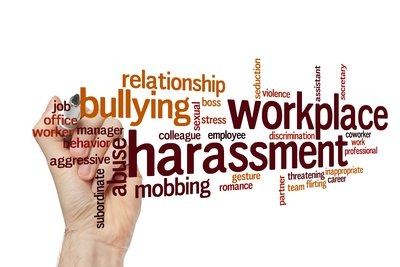
The Protection Against Harassment of Women at the Workplace Act, 2010 was Pakistan’s first legislative attempt to treat workplace harassment as a distinct legal wrong. For over a decade, its narrow definitions of “workplace” and “harassment” have limited its reach. This was confirmed by the Supreme Court’s 2021 ruling in Nadia Naz v. President of Pakistan, which held that only sexual conduct fell within the act. The 2022 Amendment responded by significantly widening both definitions, which extended coverage to informal workers, domestic workers, students, and non-sexual gender-based discrimination. This article argues that while the 2022 Amendment has closed several of the Act’s original gaps, the law’s practical effectiveness continues to be undermined by weak compliance among inquiry committees, evidentiary hurdles, and low public awareness. The central obstacle to justice for harassment complaints in Pakistan has shifted from the text of the law to its enforcement.
Introduction
Workplace harassment remains a pervasive problem in Pakistani society. Surveys of working women in both the public and private sectors have repeatedly found sexual harassment to be widespread and the issue extends into universities, informal workplaces, and the domestic labour sector. The Protection Against Harassment of Women at the Workplace Act, 2010 (“the Act”) was enacted to address this by criminalising harassment and creating a dedicated complaints machinery, i.e., Inquiry Committees within organisation and an Ombudsman system above them.
For its first 12 years, however, the Act operated with a narrow definition of workplace and, following the Supreme Court’s 2021 interpretation, an even narrower definition of harassment limited strictly to a conduct of a sexual nature. The Protection Against Harassment of Women at the Workplace (Amendment) Act, 2022 change this considerably.
This inquiry matters beyond the specifics of a single statute. Workplace harassment law is frequently treated, in both policy discussion and legal commentary, as a matter of definitional adequacy, as though extending coverage on paper were sufficient to change outcomes for complaints. The trajectory of Pakistan’s act since 2010 suggests otherwise. A legislative framework can be substantially strengthened in its text while remaining largely unchanged in its practical effect, if the institutions responsible for applying it are not correspondingly strengthened.
What Counts as Harassment and Who is Protected
The original Act defined harassment as any unwelcome sexual advance, request for sexual favours, or other verbal, visual, or physical conduct of a sexual nature that interferes with work performance or creates A hostile work environment, including retaliation for refusing such advances. In 2021, in Nadia Naz v. President of Islamic Republic of Pakistan, the Supreme Court interpreted this definition strictly. It held that the Act covered only harassment demonstrably sexual in nature and that non-sexual demeaning conduct, regardless of however damaging it is to the victim, was not actionable under it, notwithstanding the Act’s broader title.
The 2022 Amendment was a direct legislative response. It inserted a new move into the definition of harassment covering “discrimination on the basis of gender, which may or may not be sexual in nature,” bringing gender-based discrimination that creates an abusive or hostile working environment within the Act’s scope for the first time. The Amendment also replaced “a woman or man” with “any person” in the definition of complainant, extending protection to transgender people, and added protection for former employees who have resigned or been dismissed, and for parents or guardians filing on behalf of a minor complainant.
The definition of “employee” was similarly widened. Where the original Act’s protections were implicitly tied to formal employment, the amended act now explicitly extends to informal workers without contracts, freelancers, domestic workers, trainees, apprentices, students, performers, artists, and sportspersons.
The Expanded Meaning of “Workplace”
Whether an educational institution qualified as a “workplace” under the original act was tested before the Federal Ombudsman in Nadia Naz v. President of Islamic Republic of Pakistan, a case involving a university lecturer accused of soliciting sexual favours from a student. The Ombudsman held that educational institutions fell within the acts definition of “organisation” under Section 2(n), and that a student need not be an employee of the institution to bring a complaint. That ruling extended the Act’s reach to universities, but it did not resolve the Act’s more structural limitation, i.e., the definition of “workplace” still tied protection to a physical location tied to formal employment, leaving gaps around employer-provided transportation, remote or off-site work, and domestic service.
The 2022 Amendment addressed this directly. “Workplace” is now defined to include any place where services are rendered by professionals, expressly naming educational institutions, performance and sporting facilities, courts, highways, and any building, factory, open area, or larger geographical area where an organisation’s or employer’s activities are carried out, including situations connected to work outside the office.
This brings the Pakistani framework considerably closer to the approach taken in India’s Sexual Harassment of Women at Workplace (Prevention, Prohibition and Redressal) Act, 2013, which was previously more expensive in defining both aggrieved woman and workplace, including notably, employer-provided transportation and domestic workers within its scope. Much of that gap has now narrowed. Domestic workers and informal workers are within the amended Pakistani Act’s definition of employee, and travel connected to work is captured by the broadened “workplace” definition. What the Indian framework still does more explicitly is name specific categories of aggrieved women (including those hired “directly or under contract”) with a precision the Pakistani provision does not fully replicate, but the practical distance between the two regimes is now considerably smaller than it was.
Territorial Application
Section 1 of the Act sets out its territorial reach. In Salim Javed Baig v. Federal Ombudsman, the Lahore High Court considered whether the federal act applied to a complaint where the cause of action arose within a province. The court held that the federal act must be read down so as to apply only to territories that do not form part of any province, following Section 1(2) of the Act. Read alongside the 18th Constitutional Amendment, displaces jurisdiction over provincially-arising complaints with the Provincial Ombudsman, while the Federal Ombudsman retains exclusive jurisdiction over complaints arising in areas outside provincial boundaries.
The Inquiry Committee and Ombudsman Structure
Section 3 requires every organisation to establish a permanent Inquiry Committee, at least one of whose three members must be a woman. A member who is the subject of a complaint is replaced for that complaint. Under Section 5, the Committee may summon and examine witnesses under oath, compel production of documents, take a fit of it evidence, and order a medical examination of the complainant. It is required to maintain confidentiality and to record its findings within 30 days of a complaint being filed. Depending on those findings, Section 4 penalties range from formal censure or withholding of compensation to demotion, compulsory retirement, dismissal, or a fine. If a complaint is found to be baseless, the committee may refer the matter to the ombudsman.
A complaint or accused dissatisfied with the Committee’s decision may appeal to the Ombudsman, whose office is established at both federal and provincial level for four-year terms (Sections 6 to 10). Under the Code of Civil Procedure, 1908 (Act V of 1908), the Ombudsman exercises the powers of a civil court. A Federal Ombudsman decision cannot be appealed to any other court, reflecting the Act’s aim of providing prompt and affordable redress, though under section 9 a representation may be made to the provincial government or the President within 30 days of the decision.
Comparative Perspective
Comparisons between the Pakistani and Indian frameworks are common in commentary on this act, and it is worth setting out precisely what remains different now that the 2022 Amendment has taken effect, rather than repeating a comparison that predates it. India’s Sexual Harassment of Women at Workplace (Prevention, Prohibition and Redressal) Act, 2013 defines “aggrieved woman” broadly enough to include women of any age, employed or not, in relation to a workplace, and express the extensive domestic workers through a separate limb of definition. It also names specific categories of women covered “whether employed or not” and “whether for remuneration or not,” a formulation intended to leave no ambiguity about coverage of unpaid or informal arrangements.
The amended Pakistani act now achieves much the same practical coverage through its expanded definition of “employee”, but it does so through an enumerated list rather than India’s more general “whether employed or not” formulation. This is not a trivial drafting difference. An enumerated list requires future claimants to fit within a named category, whereas open-textured language extends more naturally to work arrangements not yet anticipated by the legislature, such as gig-economy platforms or emerging categories of remote contract work. A future amendment adopting more general language, rather than a further list of name categories, would future-proof the Act against the same interpretive gaps that necessitated the 2022 Amendment in the first place.
A second remaining difference concerns institutional architecture. India’s 2013 Act requires every workplace within 10 or more employees to constitute an Internal Complaints Committee and mandates District Officers to constitute Local Complaints Committees to receive complaints from workplaces too small to have their own committee, or from domestic workers and informal workers who have no fixed employer-based workplace at all. Pakistan’s Act, even as amended, still assumes every complaint has an identifiable organisation against which to lodge a complaint, which sits awkwardly with the newly-included categories of domestic and informal workers who frequently do not have one. Introducing an equivalent to the Local Complaints Committees would meaningfully close this remaining structural gap, particularly for the domestic workers the 2022 amendment was intended to protect.
Recommendations
Several concrete steps would help translate the 2022 Amendments expanded definitions into practical protection.
First, the Act should be amended to require organisations to register their inquiry committee with the relevant Ombudsman’s office annually, creating a compliance record independent of any individual complaint. This would replace the current reactive pattern in which committees are frequently formed only once a complaint is filed with a verifiable baseline of institutional compliance.
Second, provincial and federal Ombudsman officers should be empowered and resourced to support inquiry committees with investigative assistance in gathering evidence, particularly for gender-discrimination complaints under the 2022 Amendment’s non-sexual harassment provisions, which by their nature can be harder to substantiate through direct physical or documentary evidence than the sexual-conduct complaints the original act was designed around.
Third, a forum analogous to the Local Complaints Committees, not tied to a specific employer, would allow domestic workers freelancers and other informal workers newly covered by the 2022 amendment to bring complaints even where no internal inquiry committee exists to receive them.
Fourth, sustained public awareness campaigns remain necessary if expanded protections introduced in 2022 are to be understood and used by the workers they were designed to protect, rather than remaining, in practise, unused entitlements. This can be done through educational curricula, workplace inductions, and media outreach.
Where the Act Still Falls Short in Practise
The 2022 Amendment resolved the Act’s most significant definitional gaps. It did not, however, address the implementation problem that limit the Act’s effect on the ground, and these remain the more pressing obstacle to justice for complaints.
First, Inquiry Committees required under Section 3 are, in practise, inconsistently established. Reviews of complaints filed with the Ombudsman’s office suggest that many organisations form a Committee only after a complaint has already been lodged rather than maintaining one on a standing basis as the Act requires. The Act contains no mechanism for proactively auditing organisation compliance or for receiving anonymous complaints, a Committee’s existence is effectively triggered by a complaint rather than mandated independently of one.
Second, a substantial proportion of complaints are dismissed for want of convincing evidence, reflecting the difficulty of substantiating harassment claims within a 30-day inquiry window, and the absence of any dedicated investigative agency to support committees in gathering evidence.
Third, the Act’s Internal Departmental Conflict System channels most disputes towards the Ombudsman’s office, regardless of the route initially taken. Since the ombudsman holds the powers of a civil court, more consistent use of summons, formal hearings, and referral to an investigative body could shorten what is often a delayed resolution process.
Finally, low public awareness continues to suppress the number of complaints filed relative to the scale of the problem. Civil society organisations, together with FOSPAH, have called for the inclusion of harassment law in academic curricula and for sustained public information campaigns to close the gap between what the amended act guarantees and what employees, students, and domestic workers know they are entitled to claim.
The Underlying Rationale: Why a Distinct Statute Was Needed
It is worth recalling why Pakistan legislated separately for workplace harassment rather than relying on existing criminal law. Prior to 2010, harassment complaints largely depended on Section 509 of the Pakistan Penal Code, 1860, which criminalises words, gestures, or acts intended to insult the modesty of a woman. That provision requires proof of criminal intent to a standard appropriate for a penal prosecution, imposes the ordinary burdens and delays of the criminal justice system, and offers no organisational or employment-specific remedy. The 2010 Act’s civil, organisation-based mechanism was designed precisely to avoid these obstacles. A lower evidentiary threshold, a 30-day resolution target, and remedies operating within the employment relationship itself rather than through the criminal courts.
This context matters for evaluating the 2022 Amendment, because it clarifies that the Act’s civil, employer-centred design remains sound. What required correction was the scope of who and what it covered, not the underlying mechanism.
Conclusion
The Protection Against Harassment of Women at the Workplace Act, 2010 was Pakistan’s first legal recognition of workplace harassment as an actionable wrong, and it affirmed the state’s commitment under international instruments including the UDHR and CEDAW. Its early years, however, were shaped by a narrow judicial reading of “harassment” space and a workplace definition that left informal and domestic workers largely unprotected. The 2022 Amendment corrected much of this. It broadened who counts as an employee, what counts as a workplace, and what counts as harassment, extending protection to categories of workers who had previously fallen outside the Act’s reach.
But the Amendment could not do by itself is guarantee consistent enforcement. Inquiry Committees that exist only on paper, evidentiary hurdles within a short inquiry window, and continued gaps in public awareness mean that a practical protection available to a harassment complainant still depends heavily on the organisation and forum she happens to encounter. Closing that gap is the task that remains for Pakistan’s harassment law going forward.
Bibliography:
- Protection against Harassment of Women at the Workplace Act 2010 (Act IV of 2010), as amended by the Protection against Harassment of Women at the Workplace (Amendment) Act 2022 (Act V of 2022).
- Nadia Naz v President of Islamic Republic of Pakistan (Supreme Court of Pakistan, Petition No 4570 of 2019, 2021).
- Salim Javed Baig v Federal Ombudsman (Lahore High Court).
- Sahar Iqbal, ‘Evolution of Workplace Harassment Laws in Pakistan: The Protection Against Harassment of Women at the Workplace Act 2010 and the 2022 Amendment’ (International Bar Association, 12 December 2023).
- Human Rights Watch, ‘Pakistan’s New Law Aims to Protect Women in Workplace’ (20 January 2023).
- S Samo, ‘Confronting Workforce Harassment’ The Express Tribune (20 November 2023).
- I Junaidi, ‘Over 700 Harassment Cases Registered with Ombudsperson Last Year’ Dawn (3 January 2024).
- M Ali, ‘FOSPAH Chairperson Says Anti-Harassment Law Needs Inclusion in Syllabus for Wider Awareness’ UrduPoint (19 February 2025).
- M Khan and A Ahmed, ‘The Protection Against Harassment of Women at the Workplace Act 2010: A Legislative Review’ (Shaikh Ahmad Hassan School of Law, Lahore University of Management Sciences).
- A Farhad and H Shahjehan, ‘An Analysis of the Implementation of Protection Against Harassment of Women at Workplace Act, 2010: In the Light of Decisions of Judicial Forums in Pakistan (2011–2015)’ (2021).
- RN Ali, J Wajahat and NM Jan, ‘Combating the Harassment of Women at Workplace: An Analysis of Legislation in Pakistan’ (2021) 1(1) Journal of Social Sciences Review 72–93.
The opinions expressed in this article are the author's own and do not reflect the views of LEAP Pakistan or Pakistan College of Law.