- Legal Education and Access Portal

Punjab govt declares Careem, Uber illegal
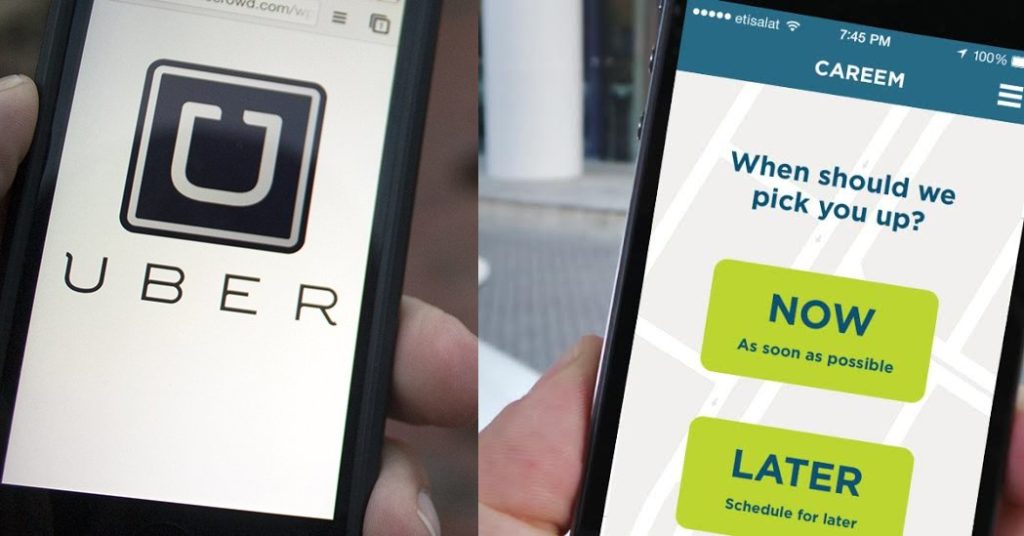
The Punjab Government’s Provincial Transport Authority on Monday declared ride-sharing services Uber and Careem operating in Lahore as illegal.
A notification was issued in this regard to the Chief Traffic Officer of Lahore and to the Chief Executive Officer of the Lahore Transport Company.
The notification states that the two companies have been offering transport services “without registering the private cars with any regulatory body.”
The notification claims that the utilisation of private cars by Uber and Careem for commercial purposes is a violation of local laws of the city.
The provincial government has also stated in the notification that the failure of Uber and Careem to obtain the required fitness certificate and route permits for their fleet of cars has resulted in “great loss to the government.”
In December last year, the offices of Careem Networks (Pvt) Ltd were shut down in Islamabad after show-cause notices were issued to them in response to complaints lodged against them by the local Taxi Driver Welfare Association.
An official at the time had said the company was operating in the city “without approval or a permit”.
In Feb 2016, Chief Minister Shahbaz Sharif and thee Mayor of Istanbul Kadir Topbas inaugurated the A-Taxi (cab) service after the Punjab government and Istanbul Metropolitan Municipality signed an agreement in this regard.
Under the agreement, Turkish firm Al-Baryak will operate the cab service, equipped with modern navigation and security features.
“It is a matter of great pleasure for the people of Pakistan in general and residents of Lahore in particular to have such a modern facility in the provincial capital,” Shahbaz had said at the time of the inauguration.
Government bans on services such as Uber and Careem may prove to be counterproductive as the largely successful ride-sharing services are able to fill a vacuum created by the governments negligence towards public transport provision.
While Dubai-based Careem directly made inroads into markets in Karachi, Lahore and later Islamabad in October 2015, its San Francisco-based rival, Uber, began operations in Lahore in 2016.
With the launch of the ride-sharing services, commuters no longer face long waits in ques for busses that are often negligent in their operations, schedules and safety standards.
While a metro bus services has been operating in Lahore and Islamabad, the larger metropolis of Karachi has had to cope with shortage of public transport.
According to a report published in 2015, of Karachi’s 329 official bus routes, only 111 are being operated. The remaining routes were abandoned as “they are not considered lucrative by the transporters”.
The operating buses have also had to face the pressure of rising fuel prices, maintenance costs, and lack of protection from the government.
Uber and Careem have previously expressed their willingness to work with the authorities and comply with licenses.
However, the government has continued to view the services as ‘taxi companies’ even though the fleet of cars operating under Careem and Uber are not owned by the companies. No laws have been created to accommodate a new economy.
Source: Dawn
The opinions expressed in this article are the author's own and do not reflect the views of LEAP Pakistan or Pakistan College of Law.