- Legal Education and Access Portal

A Warming Nation, a Withering Harvest
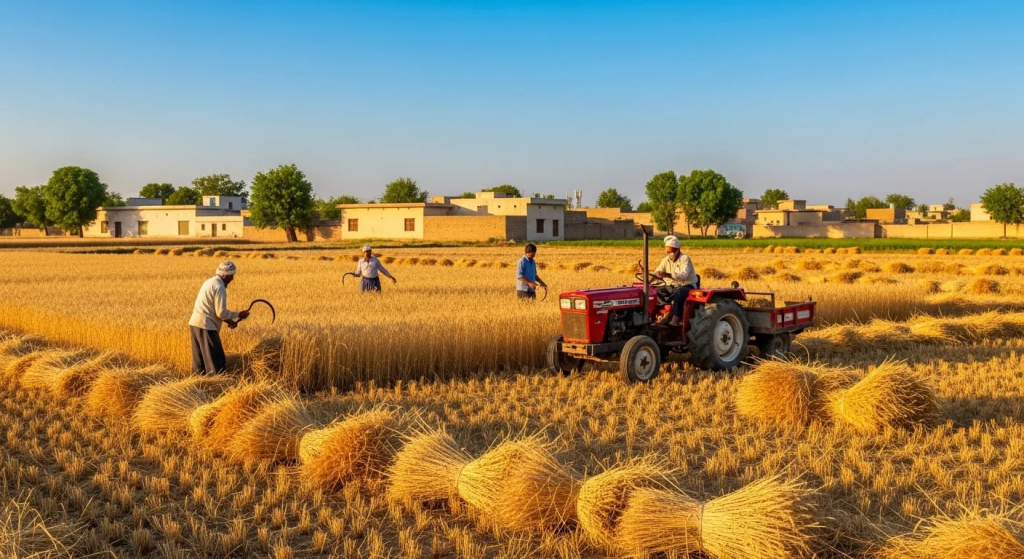
Farming has always been the lifeblood of Pakistan. The weather patterns that guided growers for centuries are breaking down completely. A farmer today faces scorching heat right when crops need to mature. Sudden downpours wash away months of intense labor, and long dry spells turn fertile soil into dust. Our country leans heavily on the agricultural sector for survival. This growing chaos brings terrifying consequences. The damage creeps into food supplies. It disrupts manufacturing hubs and hurts national export figures. A weakened agricultural base guarantees a shaky economy for everyone.
The Climate Reality
Looking at the data makes the situation starker. Temperatures are climbing steadily across the board. The Pakistan Meteorological Department notes a warming trend of roughly 0.18 degrees Celsius every year. Numbers on a page translate to brutal realities in the dirt. Intense heat bakes the soil. It dries up local water reserves. Monsoon rains behave erratically. Some districts drown in flash floods while other regions crack from severe drought. Up north, glaciers melt at frightening speeds. Rapid melting multiplies flood risks for downstream villages. The devastation of 2022 showed exactly what happens when systems fail. That catastrophic flood wiped out thousands of acres of standing crops. Massive numbers of livestock perished. Roads washed away completely. Millions lost their homes overnight. Climate change is battering the country right now.
Impacts on Crop Production and Water Resources
Yields for staple commodities like wheat and rice keep dropping. Research confirms the devastating impact of erratic rainfall and temperature spikes on major harvests. A grower sinks heavily into debt to buy seeds and fertilizers long before harvest time. Extreme weather destroys that massive investment instantly. Water scarcity compounds the everyday misery. Surface water remains completely unreliable. Growers pump groundwater frantically to keep plants alive. We are draining deep aquifers much faster than nature can refill them. Warmer weather also breeds aggressive new pests. Farmers end up buying more chemical sprays. They desperately try to save whatever is left of their fields. They spend higher amounts of cash for increasingly smaller yields.
The Collapse of the Cotton Economy
The collapse of the local cotton crop shows the reality of this national crisis. Cotton feeds the country’s textile industry. Millions depend on this single plant from the ginning process to garment manufacturing. Production plummeted from 8.17 million bales down to about 5.45 million recently. That is a 33 percent crash in one year. Punjab and Sindh took the worst hits. Textile mills cannot just pause operations and wait for better weather. Factory owners have orders to meet. Workers need to be paid. Businesses are importing expensive foreign cotton to survive the local shortage. This desperate stopgap measure drains billions of dollars from our foreign exchange reserves. Textiles bring in more than half of Pakistan’s export revenue. Relying heavily on imported raw materials threatens the core of our manufacturing sector.
Socioeconomic Consequences and Debt
Financial ruin waits at the end of every failed harvest. A single climate shock obliterates months of hard work. The money spent on diesel and fertilizer simply disappears into the mud. Most growers borrow heavily from informal lenders just to finance their planting season. A ruined field leaves them trapped. They take out fresh loans to try again next year, hoping for better rain. Another drought pushes them deeper into the hole. Rural land eventually turns into a poverty trap. Urban consumers feel this exact same pain at the grocery store. Smaller harvests lead to food shortages. Prices skyrocket. Low income families spend most of their daily earnings on meals. People are forced to cut back on healthcare and schooling when basic groceries become unaffordable.
Urban Migration and Economic Instability
Agriculture makes up roughly 23 percent of the national GDP. Repeated harvest failures are literally shifting the country’s population demographics. Entire families end up abandoning their barren fields. They migrate to crowded urban centers looking for daily wage labor. Existing city infrastructure lacks the housing and transport networks to absorb these massive crowds. Slums expand rapidly. Local sanitation systems break down entirely under the pressure. Back in the rural districts, the local economy grinds to a halt. Truckers have no cargo to haul. Food processors face random supply shortages that ruin their production schedules. Long term planning becomes impossible. Investors pull back their money. A country struggling to feed itself loses its economic footing.
Building Climate Resilience
We have to stop acting surprised by violent weather. Handing out relief checks after a flood achieves very little over the long term. Pakistan needs to overhaul its farming practices immediately. Agricultural researchers require emergency funding to develop seed varieties capable of surviving extreme heat and growing on less water. Traditional flood irrigation methods waste too much. Farmers must switch to highly efficient drip systems. Every single drop of water matters today. Growers also need accurate local weather forecasts delivered straight to their mobile phones. Government subsidies for modern equipment and resilient seeds are highly needed. Crop insurance represents another missing piece of the puzzle. It would prevent a single bad season from bankrupting a rural family. Planting trees and protecting watersheds will help stabilize the local environment.
Conclusion
Delaying action guarantees future disaster. Extreme weather already dictates the price of bread and the stability of our currency. The shrinking cotton supply and vanishing groundwater serve as blaring alarms. Protecting the fields secures the whole nation’s future. A strong agricultural base keeps people in their homes and factories running smoothly. We must build infrastructure that handles the shock of extreme heatwaves and floods. Establishing climate resilience in the farming sector is a basic requirement for national survival.
Bibliography:
Reports, institutional publications and websites
Food and Agriculture Organization of the United Nations, ‘Climate-Smart Agriculture’ https://www.fao.org/climate-smart-agriculture/en/ accessed 9 September 2026
Food and Agriculture Organization of the United Nations, ‘FAO in Pakistan’ https://www.fao.org/pakistan/en accessed 9 September 2026
Intergovernmental Panel on Climate Change, AR6 Synthesis Report: Climate Change 2023 https://www.ipcc.ch/report/ar6/syr/ accessed 9 September 2026
Ministry of Finance, Government of Pakistan, Pakistan Economic Survey 2023–24 https://www.finance.gov.pk/survey_2024.html accessed 9 September 2026
Ministry of Finance, Government of Pakistan, Pakistan Economic Survey 2024–25 https://www.finance.gov.pk/survey_2025.html accessed 9 September 2026
Ministry of National Food Security & Research, Government of Pakistan https://mnfsr.gov.pk accessed 9 September 2026
Pakistan Bureau of Statistics https://www.pbs.gov.pk accessed 9 September 2026
Pakistan Meteorological Department, ‘Climate Change’ https://www.pmd.gov.pk/rnd/rndweb/rnd_new/climchange.php accessed 9 September 2026
Trade Development Authority of Pakistan https://tdap.gov.pk accessed 9 September 2026
World Bank, ‘Climate-Smart Agriculture’ https://www.worldbank.org/en/topic/climate-smart-agriculture accessed 9 September 2026
World Food Programme, ‘Pakistan’ https://www.wfp.org/countries/pakistan accessed 9 September 2026
Journal articles
‘Climate Change and Its Impact on Major Food Crops in Pakistan’ https://pmc.ncbi.nlm.nih.gov/articles/PMC5483611/ accessed 9 September 2026
‘Climate Change and Major Crop Production in Pakistan’ https://pubmed.ncbi.nlm.nih.gov/34417972/ accessed 9 September 2026
The opinions expressed in this article are the author's own and do not reflect the views of LEAP Pakistan or Pakistan College of Law.