- Legal Education and Access Portal

The Colonial Specter of Punjab’s Habitual Offenders Bill
Abstract
The recently proposed, Punjab Control of Habitual Offenders and Anti-Social Behaviour Bill, 2026, introduced to replace colonial-era preventive and public order laws, represents a profound constitutional crisis dressed in the veneer of administrative modernization. By transferring punitive authorities from the judiciary to executive-led intelligence committees, the legislation structurally violates the separation of powers and the fundamental right to a fair trial under Article 10A of the Constitution of Pakistan. This article provides a doctrinal analysis of the Bill, exploring its historical roots in colonial jurisprudence, its reliance on ambiguous terminology to circumvent due process, and its broader implications for civil liberties, digital rights, and the rule of law in Pakistan.
- Introduction: The Jurisprudential Chasm
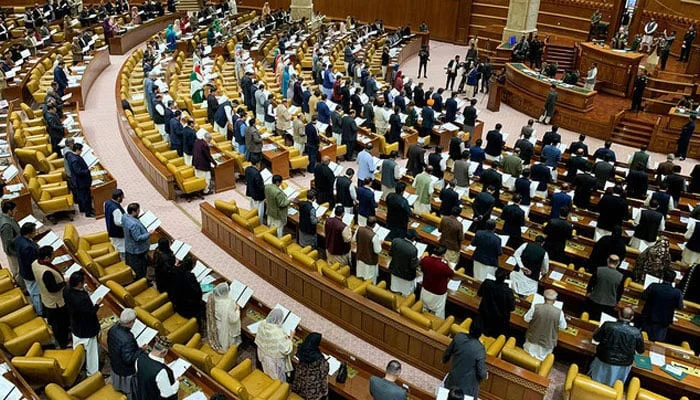
The introduction of the Punjab Control of Habitual Offenders and Anti-Social Behaviour Bill, 2026 in the provincial assembly has triggered a necessary, albeit delayed, reckoning with the state’s reliance on preventive and administrative penal frameworks. While the government has marketed the proposed legislation as a modernized and rather surgical tool to combat organized crime, digital threats, and public nuisance, a rigorous doctrinal review reveals it to be a legislative overreach of unprecedented proportions. Following intense backlash from legal fraternities and civil society, the assembly’s Speaker wisely halted its immediate passage, referring it to the Standing Committee on Law. However, the foundational premise of the Bill, that the executive requires extra-judicial powers to preemptively penalize citizens, remains a live and present danger.
This article argues that the Bill is not merely procedurally flawed but constitutionally ultra vires. It seeks to institutionalize a parallel justice system where the presumption of innocence is effectively discarded. By granting sweeping powers to administrative intelligence committees to freeze assets, revoke National Identity Cards (CNICs), mandate electronic surveillance, and erase online presences without a prior judicial conviction, the legislation assaults the very bedrock of constitutional democracy. It is an exercise in colorable legislation, attempting to achieve indirectly what the Constitution expressly forbids: the subversion of judicial authority and the denial of due process.
- The Epistemology of Control: Colonial Continuities
To comprehend the structural DNA of the 2026 Bill, one must locate it within its historical and epistemological continuum. The provincial government explicitly frames this legislation as a necessary successor to the Restriction of Habitual Offenders (Punjab) Act of 1918 and the Punjab Control of Goondas Ordinance of 1959. However, repealing these archaic statutes only to replace them with a technologically empowered replica is a profound jurisprudential failure.
These predecessor laws were the archetypal instruments of the British Raj, heavily influenced by the logic of the infamous Criminal Tribes Act of 1871. The colonial legal paradigm was predicated on a master-subject relationship, not a social contract between a democratic state and its citizens. The underlying philosophy was one of administrative expediency: certain populations or individuals were deemed inherently problematic, and the state required flexible, non-judicial mechanisms to manage them. The courts, with their pedantic insistence on evidence and the burden of proof, were viewed by colonial administrators as an impediment to maintaining “order.”
By resurrecting the spirit of 1918 in 2026, the Punjab government is signaling a dangerous regression to this colonial logic. We are witnessing the reinstitution of the Rowlatt Act’s infamous paradigm of “Na Dalil, Na Vakil, Na Appeal” (No Argument, No Lawyer, No Appeal). The 2026 Bill does not dismantle the colonial panopticon; it merely digitizes it, swapping colonial registers for biometric databases and physical exile for electronic ankle monitors. In a post-colonial democratic republic bound by a written constitution, the persistence of such statutory mechanisms is an anachronism that actively hostile to the concept of equal citizenship.
- Constitutional Subversion: The Demise of the Separation of Powers
The most glaring constitutional infirmity of the Habitual Offenders Bill lies in its flagrant violation of the doctrine of separation of powers, the trias politica that forms the architectural core of the Constitution of the Islamic Republic of Pakistan. Article 175 of the Constitution explicitly mandates the separation of the judiciary from the executive. The jurisprudence established by the Supreme Court of Pakistan, notably in landmark judgments like Sharaf Faridi v. Federation of Pakistan, underscores that judicial power cannot be exercised by the executive, nor can the executive establish parallel tribunals that usurp the functions of the ordinary courts.
The Bill directly contravenes this principle by establishing “intelligence committees” at the provincial, divisional, and district levels. These committees, overwhelmingly composed of police officials, bureaucrats, and intelligence operatives, are granted the statutory authority to evaluate threats, monitor behavior, and impose severe punitive measures. Under the proposed framework, these executive bodies can order the freezing of bank accounts, the confiscation of mobile phones, the blocking of passports, and the extraction of high-value surety bonds.
This represents a textbook definition of executive usurpation. The power to penalize, to restrict a citizen’s liberty, and to seize private property are inherently judicial functions. They require the rigorous testing of evidence, the opportunity for cross-examination, and the establishment of guilt beyond a reasonable doubt by an impartial adjudicator. By empowering the executive to bypass the courts and levy penalties based purely on subjective intelligence assessments or mere First Information Reports (FIRs), the legislature is effectively collapsing the executive and the judiciary into a single, unchecked entity. This obliteration of institutional boundaries transforms the police from an investigative agency into a judicial authority, violating the basic structure of the constitutional framework.
- Article 10A and the Illusion of Due Process
The operational mechanics of the Bill represent a direct assault on Article 10A of the Constitution, which elevating the right to a fair trial and due process to the status of a fundamental right. Article 4 further guarantees the right of individuals to be dealt with in accordance with the law, ensuring that no action detrimental to the life, liberty, body, reputation, or property of any person shall be taken except in accordance with the law.
The Bill defines a “habitual offender” not as an individual who has been repeatedly convicted by a competent court of law, but appallingly, as someone who has been arrested more than once for specified offenses. This definitional sleight of hand fundamentally subverts the presumption of innocence. It conflates accusation with guilt, and police suspicion with judicial finality. In the Pakistani criminal justice system, where the registration of false or politically motivated FIRs is a well-documented systemic flaw, allowing multiple arrests to serve as the threshold for severe administrative penalties is a recipe for targeted victimization.
Furthermore, the Bill provides that defying an order from these executive intelligence committees carries a penalty of up to four years in prison. Thus, the citizen is forced into a Kafkaesque bind: submit to an unconstitutional, extra-judicial punishment imposed by a police committee, or face formal imprisonment for non-compliance. The judicial review available under such a scheme is entirely illusory, as the appellate mechanisms are likely to be restricted or structurally biased toward the executive’s initial “intelligence” findings. This completely circumvents the procedural safeguards guaranteed by the Code of Criminal Procedure (CrPC) and the Qanun-e-Shahadat Order, 1984.
- The Doctrine of Vagueness and the Weaponization of Ambiguity
Beyond structural usurpation, the legislation is fatally compromised by its reliance on deeply ambiguous and overly broad terminology. The draft lists over twenty categories of offenses under the umbrella of “anti-social behaviour.” While it ostensibly targets severe crimes such as extortion and drug trafficking, it simultaneously criminalizes nebulous acts such as spreading “misinformation,” using abusive language in public, and causing “public annoyance.”
In constitutional law, legislation of this nature falls squarely afoul of the void for vagueness doctrine. A fundamental tenet of legal certainty and the rule of law dictates that a penal statute must provide ordinary citizens with fair notice of what conduct is prohibited. Laws must establish clear, objective guidelines to govern law enforcement; they cannot leave the parameters of an offense to the subjective, arbitrary, and capricious interpretation of police officers.
When the definition of “anti-social behaviour” includes terms as subjective as “public annoyance” or “misinformation,” the law ceases to act as a shield for the public and becomes a weapon for the state. In a highly polarized political environment, such ambiguity is inevitably weaponized. History has consistently demonstrated that laws lacking precise definitions are disproportionately utilized to suppress political dissent, muzzle independent journalists, and harass minority communities. The power to penalize “misinformation” via an executive committee without judicial oversight is a direct violation of Article 19 of the Constitution, which guarantees freedom of speech and expression. It introduces a chilling effect on public discourse, enabling the state to digitally and financially incapacitate its critics under the guise of maintaining public order.
- The Digital Panopticon: Privacy, Surveillance, and Article 14
Perhaps the most dystopian element of the 2026 Bill is its integration of modern surveillance technology into its punitive framework. The legislation empowers magistrates, acting on the behest of the intelligence committees, to force unconvicted citizens to wear electronic monitoring devices, such as ankle bracelets, for a minimum of three months. Furthermore, it explicitly authorizes the removal of an individual’s “online and cyberspace presence.”
These provisions strike at the very heart of Article 14 of the Constitution, which guarantees the inviolability of the dignity of man and, subject to law, the privacy of the home. The involuntary application of an electronic tracking device on an individual who has not been convicted of a crime is a severe deprivation of liberty and a gross infringement of privacy. It constitutes a disproportionate state intrusion that fails the test of reasonable restriction.
Moreover, the power to erase a citizen’s “cyberspace presence” is a draconian form of digital exile. In the modern era, participation in social, economic, and political life is inextricably linked to digital access. To sever an individual from the digital sphere without a rigorous judicial trial is akin to a modern-day bill of attainder. Combined with the authority to amass unregulated databases of biometric data, DNA samples, and fingerprints of mere suspects, the Bill facilitates the creation of an unaccountable surveillance state, operating entirely outside the boundaries of judicial oversight and constitutional privacy protections.
- Conclusion: The Imperative of Rejection
The Punjab Control of Habitual Offenders and Anti-Social Behaviour Bill, 2026, is an affront to the jurisprudence of a modern democratic state. It is an attempt by the executive to appropriate the gavel of the judge, bypassing the constitutional imperatives of due process, the separation of powers, and the fundamental rights of citizens.
While the suspension of the Bill by the Punjab Assembly Speaker is a welcome temporary relief, cosmetic amendments at the committee stage will not cure its foundational defects. The structural DNA of this legislation is inherently hostile to the Constitution. One cannot amend a law whose core premise is the circumvention of the judiciary. If the state wishes to effectively combat organized crime and habitual offending, the solution lies in capacitating the prosecution, reforming the police, and strengthening the judicial infrastructure, not in creating a parallel executive legal system.
For the sake of constitutional supremacy and the preservation of civil liberties, this Bill must not be merely revised; it must be discarded in its entirety. Surrendering judicial power to administrative intelligence committees is not a step towards law and order; it is a rapid descent into the abyss of a police state.
Bibliography:
- The Constitution of the Islamic Republic of Pakistan, 1973. Articles 4, 9, 10A, 14, 19, and 175. Available at: Pakistani.org – Constitution
- The Restriction of Habitual Offenders (Punjab) Act, 1918. Punjab Laws Online. Available at: Punjab Laws – Act 1918
- The Punjab Control of Goondas Ordinance, 1959. Punjab Laws Online. Available at: Punjab Laws – Ordinance 1959
- “Punjab Habitual Offenders Bill Halted Amidst Backlash.” The Express Tribune, June 2026. Available at: Tribune.com.pk
- Supreme Court of Pakistan. Sharaf Faridi v. Federation of Pakistan (PLD 1989 Karachi 404 / PLD 1994 SC 105).
- Supreme Court of Pakistan. Mustafa Impex, Karachi v. The Government of Pakistan (PLD 2016 SC 808).
- “Void for Vagueness Doctrine.” Legal Information Institute, Cornell Law School. Available at: LII – Void for Vagueness
- National Database and Registration Authority (NADRA), Pakistan. Available at: NADRA Official Website
- Human Rights Commission of Pakistan (HRCP). Annual Reports on the State of Human Rights in Pakistan. Available at: HRCP Web
- Naseer, Ghalib, Judicial Activism: Authority or Autocracy? Unravelling The Role of Judiciary in Pakistan (July 31, 2024). https://pjlaw.com.pk/index.php/Journal/article/view/v3i7-31-50, Available at SSRN: https://ssrn.com/abstract=5194287 or http://dx.doi.org/10.2139/ssrn.5194287
The opinions expressed in this article are the author's own and do not reflect the views of LEAP Pakistan or Pakistan College of Law.