- Legal Education and Access Portal

The Constitutional Status of Gilgit-Baltistan: A Legal Grey Zone
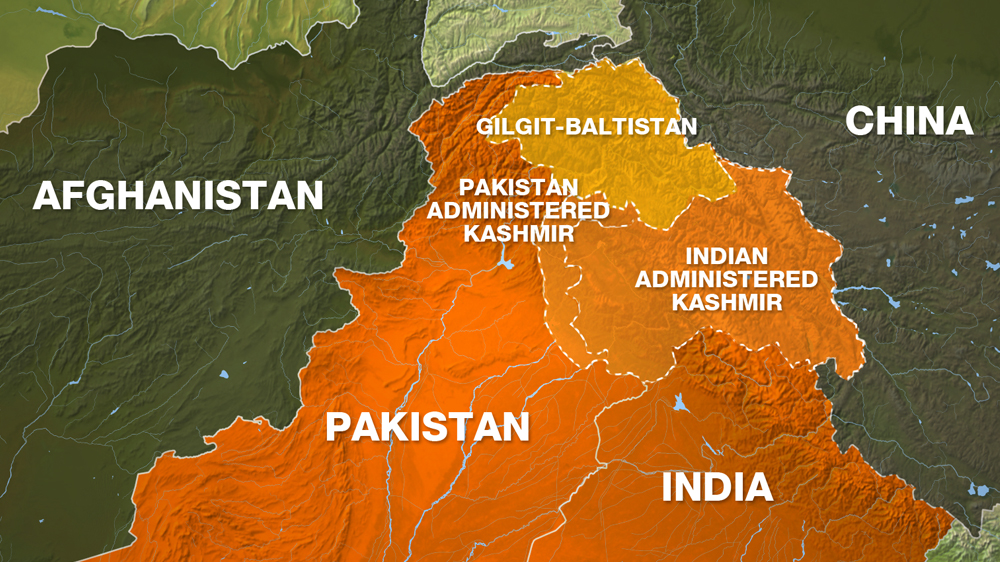
Gilgit-Baltistan, previously known as the Federally Administered Northern Areas, is one of the most complicated geopolitical and constitutional anomalies in South Asia. It sits at a major strategic crossroads connecting China, Central Asia, and Pakistan, and it serves as the only land gateway for the China-Pakistan Economic Corridor (CPEC).
Even though the region is incredibly vital and its people have always stood with Pakistan, it remains stuck in a legal limbo. It is not formally included as a province under Article 1(2) of the 1973 Constitution, but it is also not a fully independent autonomous zone. This creates a strange double reality where the region is integrated into Pakistan’s federal administration and court systems but is left out of the country’s formal map. This legal setup creates a lot of tension. On one hand, Pakistan has international obligations under United Nations Security Council Resolution 47 (1948), which treats the whole Jammu and Kashmir region as a disputed territory that needs a public plebiscite. On the other hand, the state has a clear duty to protect the fundamental rights and provide proper voting franchise to the two million people living there. This internal clash has led to a lot of local fiscal resistance and leaves Pakistan at a tough legal crossroads.
To understand why this deadlock exists, we have to look back at what happened between 1947 and 1948. Unlike other parts of Kashmir, the people of Gilgit-Baltistan fought their own local war to overthrow the Dogra regime of Maharaja Hari Singh. On November 1, 1947, local fighters alongside the Gilgit Scouts led by Subedar Major Babar Khan and a British officer named Major William Brown overthrew the Dogra governor, Major General Ghansara Singh. The local leaders quickly set up an independent provisional government with Raja Shah Rais Khan as President. After only sixteen days of running their own affairs, this provisional government decided to make an unconditional accession to Pakistan on November 16, 1947. This led to Islamabad taking over the administration and appointing the first federal Political Agent to run the region.
The administrative future of the region changed completely with the Karachi Agreement of April 27–28, 1949. This document was signed in secret by a federal minister, the president of Azad Kashmir, and the head of the All Jammu and Kashmir Muslim Conference. This agreement resulted in the complete administrative subordination of Gilgit-Baltistan, even though no local representative from the region was actually present to sign it. This lack of representation made the document highly controversial, especially later on when some signatories even denied signing it. The public did not even see this document until 1992, when it came to light during a writ petition before the Azad Kashmir High Court. By linking Gilgit-Baltistan’s status directly to the broader Kashmir dispute, the federal government wanted to make sure its population would be available to vote for Pakistan in a future UN plebiscite. However, this caused massive legal contradictions. For example, even though the Azad Kashmir Interim Constitution of 1974 claimed the territory was part of Azad Kashmir, the area stayed under the direct administrative control of Islamabad.
Since Gilgit-Baltistan is not part of the formal provinces listed in the Constitution, the federal government has historically run it through temporary executive orders. For the first twenty five years, the area was controlled under the old colonial Frontier Crimes Regulations (FCR), which gave absolute power to an unelected Political Agent and denied citizens basic legal rights like having a lawyer or filing an appeal. Even after the FCR was abolished in 1972 and the region became the Federally Administered Northern Areas (FANA), it was still run by executive decrees instead of real constitutional laws. A major legal shift happened in 1999 with the landmark Supreme Court case Al-Jihad Trust v. Federation of Pakistan (1999 SCMR 1379).
The apex court ruled that the people of the region are citizens for all practical purposes and must have fundamental rights, access to independent courts, and an elected government. In response, the government brought in different packages, eventually leading to the Gilgit-Baltistan (Empowerment and Self-Governance) Order of 2009. This set up a local assembly and a Chief Minister, but real legislative power stayed with a federal council headed by the Prime Minister of Pakistan. To quiet down local complaints, the federal government replaced this with the Government of Gilgit-Baltistan Order, 2018, which gave the local assembly more subjects but gave the Prime Minister direct veto power over local laws and court appointments.
The implementation of the 2018 Order faced intense local resistance because it took away powers from the local assembly and handed them directly to the Prime Minister’s office. Local activists and legal experts argued that this was a step backward from the 2009 reforms. There were widespread protests in cities like Gilgit and Skardu, with people calling it an undemocratic move that treated their assembly like a spectator. Legal petitions were quickly filed, showing how risky it is to run a politically conscious population using executive orders that can change whenever a new political party takes power in Islamabad.
This standoff led to another major court ruling when a seven member bench of the Supreme Court issued its verdict in Civil Aviation Authority v. Supreme Appellate Court Gilgit-Baltistan (PLD 2019 SC 357). The court used its powers to review the 2018 Order and relied heavily on the findings of the high powered Sartaj Aziz Committee Report. The Supreme Court made it clear that the residents of Gilgit-Baltistan deserve the exact same fundamental rights and judicial protections as any other Pakistani citizen. The court then approved a new framework called the Gilgit-Baltistan Governance Reforms 2019 and ordered the government to implement it quickly to give the region a provincial equivalent setup while keeping the international stance on Kashmir safe.
Unfortunately, the implementation of this judicial blueprint got delayed by shifts in the federal executive. The government filed a civil review petition to pause the 2019 draft law, claiming that the local population wanted these changes through an act of parliament rather than an executive order. Many local lawyers saw this as an excuse to avoid the court’s strict timeline. By keeping the reforms trapped in procedural delays, the center maintained its tight administrative grip over the region’s resources while leaving the local population in a state of political uncertainty.
This long constitutional delay has had bad economic and fiscal consequences for Gilgit-Baltistan. Because the region is not recognized as a formal province, it is completely excluded from the National Finance Commission (NFC) award, which divides tax revenues across the country. Instead, the local government has to rely on ad-hoc grants from the center, which makes it very hard to invest in long term infrastructure, schools, or hospitals. This financial setup has caused major public protests against federal taxes. Using the argument of no taxation without representation, local leaders point out that the federal government shouldn’t collect income taxes or customs duties from a population that doesn’t even have a single voting seat in the National Assembly or the Senate.
These economic problems look even worse when you look at the geostrategic reality of CPEC. Even though billions of dollars flow through the region for highways and energy corridors, local communities feel they do not get enough long term jobs, development benefits, or environmental protections. There is also a lot of worry about the dilution of the historical State Subject Rule, an old law from the princely state era that blocked non-locals from buying land. With wealthy outside investors buying up land for hotels and tourism, locals fear they will be demographically displaced. While the local assembly tries to protect vulnerable groups through initiatives like the local legislation for persons with disabilities, the larger systemic issues are still unresolved.
From an international law standpoint, this domestic gridlock hurts Pakistan’s compliance with global human rights treaties. Since Pakistan has signed international agreements like the International Covenant on Civil and Political Rights, it is required to give political franchise and proper court remedies to everyone living within its control. International monitors point out that territorial disputes cannot be used forever to deny people their basic civil rights. Leaving the region without a clear constitutional identity or access to the supreme judiciary creates an unneeded weakness in Pakistan’s legal arguments on the global stage.
Many legal analysts criticize the government’s very rigid interpretation of the UN resolutions. The official state position has long been that giving Gilgit-Baltistan formal constitutional status would hurt its stance on the Kashmir issue by changing the status quo before an official UN plebiscite. However, legal scholarship shows that a country can easily grant provisional constitutional rights and legislative seats to a population without a full de jure annexation. By failing to separate individual human rights from macro level territorial claims, the state has created a confusing setup that penalizes a highly loyal population.
Other regions show that constitutional integration and geopolitical caution can easily go together. For example, Pakistan has maintained a unique, autonomous setup for Azad Jammu and Kashmir under its 1974 Interim Constitution, giving it its own president, prime minister, and supreme court to protect it from direct federal overreach. Comparative models show that states can build flexible, asymmetric federal systems to give political rights to border territories without breaking international law. The Sartaj Aziz Committee actually suggested this by recommending amendments to Article 51 and Article 59 of the Constitution to give Gilgit-Baltistan provisional seats in the National Assembly and Senate without changing Article 1, which defines the permanent map of the federation.
This shows a clear legislative way forward for lawmakers to solve the crisis without triggering international legal problems. Parliament could pass a provisional constitutional amendment to temporarily integrate Gilgit-Baltistan as a provisional fifth province. This amendment can include a strict saving clause stating that this status is completely temporary and does not hurt the final resolution of the Kashmir dispute under UN resolutions. This would allow the state to give full parliamentary representation, voting rights, and a fair share of the NFC award to the local population, ending the legal grey zone completely.
In the end, solving this problem requires a clear distinction between the international status of the land and the domestic constitutional rights of its people within our legal drafts. Lawmakers can use asymmetric federalism to give the Gilgit-Baltistan assembly full control over its local resources and tourism, protecting it from sudden federal overrides. Building a stable framework requires a real consensus that brings together local lawyers, federal policymakers, and civil society. Combined with clear public awareness to protect local land rights, this is the only way to fulfill the constitutional promise of equality and give the people of Gilgit-Baltistan the dignity they deserve.
Bibliography
Primary Sources
Legislation
- Frontier Crimes Regulations 1901, British India (Regulation III of 1901) https://www.scribd.com/document/371779084/1999-S-C-M-R-1379
- The Constitution of the Islamic Republic of Pakistan 1973 https://na.gov.pk/uploads/documents/1333523681_951.pdf
- Gilgit-Baltistan (Empowerment and Self-Governance) Order 2009, Pakistan https://gilgitbaltistan.gov.pk/pages/laws
- Government of Gilgit-Baltistan Order 2018, Pakistan https://gilgitbaltistan.gov.pk/storage/downloads/GB%20Order%202018.pdf
- Gilgit-Baltistan Persons with Disabilities Act 2019, Pakistan https://nowpdp.org.pk/rehnumai/laws-and-regulation/the-gilgit-baltistan-persons-with-disabilities-act
Cases
- Al-Jihad Trust through Habibul Wahab Al-Khairi v Federation of Pakistan (1999 SCMR 1379) https://www.scribd.com/document/371779084/1999-S-C-M-R-1379
- Civil Aviation Authority v Supreme Appellate Court Gilgit-Baltistan (PLD 2019 SC 357) https://gilgitbaltistan.gov.pk/storage/downloads/GB%20Order%202018.pdf
- Provincial Government Gilgit-Baltistan v Muhammad Mashroof Khan, Supreme Appellate Court Gilgit-Baltistan (CPLA No. 113/2019) https://sacgb.gov.pk/Judgments/judgements-2021/25.%20Judgment%20of%20Muhammad%20Mashroof%20Khan.pdf
Secondary Sources
Books, Articles and Reports
- Ali S, ‘The Karachi Agreement: Gilgit Baltistan’s Unending Constitutional Crisis‘ (2024) Stratheia Journal of Geopolitics https://www.researchgate.net/publication/382249843_The_karachi_agreement_Gilgit_Baltistan_unending_constitutional_crisis
- Aziz S, ‘Gilgit-Baltistan’s Constitutional Future: Report of the High-Powered Committee on Constitutional Reforms‘ (27 September 2020) Scribd Policy Archives https://www.scribd.com/document/515133451/Future-Status-of-Gilgit-by-Sartaj-Aziz
- Chandrashekhar R, ‘Gilgit-Baltistan: Political Control and Recent Governance Developments‘ (December 2025) Centre for Joint Warfare Studies (CENJOWS) https://cenjows.in/wp-content/uploads/2025/12/Gilgit-Baltinstan-Political-Control-by-Shri-R-Chandrashekhar.pdf
- Euro-South Asian Centre for Strategic Studies, ‘Pakistan Supreme Court’s ruling on Gilgit Baltistan and its international law implications‘ (25 January 2019) EFSAS Commentary https://www.efsas.org/commentaries/pakistan-supreme-court%E2%80%99s-dubious-ruling-on-gilgit-baltistan-Is-legally-flawed/
- Mahmood U, ‘Human Rights and Constitutional Safeguards in Pakistan’s Peripheral Territories‘ (2025) Human Rights Journal Volume I https://cdn.prod.website-files.com/67e8a077db3ffc67e56df264/6806378f27bf1214891aff08_Human-Rights-Journal-Volume-I.pdf
News and Commentary
- Dawn, ‘GB’s rights: The implementation gap after the 2019 apex court verdict‘ (12 October 2020) https://www.dawn.com/news/1582210
- Dawn, ‘GB: politics of ambiguity and the normalisation of a political charade‘ (7 June 2026) https://www.dawn.com/news/2005805
- Dawn, ‘GB’s status: The ongoing movement for provisional provincial integration‘ (13 June 2026) https://www.dawn.com/news/1886684
- Jahangir’s World Times, ‘Gilgit-Baltistan and International Law: Analyzing the Civil Aviation Case 2019‘ (1 March 2019) https://www.jworldtimes.com/old-site/pakistan-affairs/gilgit-baltistan-and-international-law/
The opinions expressed in this article are the author's own and do not reflect the views of LEAP Pakistan or Pakistan College of Law.