- Legal Education and Access Portal

Live coverage of Jadhav case in ICJ
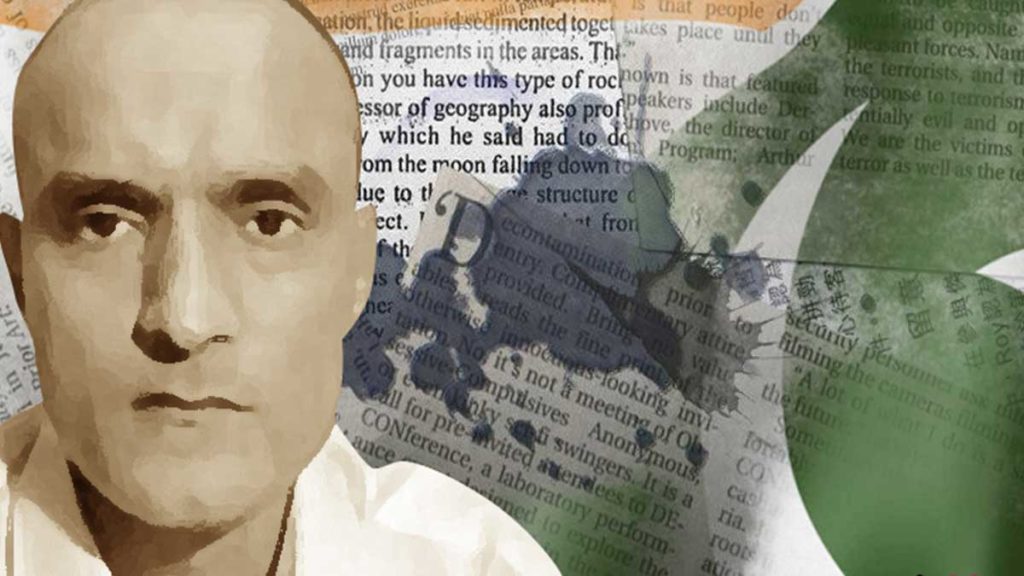
THE HAGUE: The Indian counsel concluded his submissions before the International Court of Justice (ICJ) in the Kulbhushan Jadhav case hearing at The Hague on Monday.
Jadhav was captured in Balochistan in March 2016. He confessed to his association with the Indian intelligence agency – Research and Analysis Wing (RAW) — and his involvement in espionage and fomenting terrorism in Pakistan.
Subsequently, the 48-year-old was sentenced to death by a Pakistani military court on charges of spying and terrorism in April 2017. In May 2017, India moved the ICJ against the verdict.
At the ICJ, a 15-judge bench including Somalian-Muslim Justice Abdulqawi Ahmed Yusuf and India’s Justice Dalveer Bhandari is hearing the case. After introducing the case, President Justice Yusuf informed the audience that Pakistan’s former chief justice Tassaduq Hussain Jilani, who was an ad hoc judge in this case, is unable to attend the hearing.
Speaking to The Express Tribune, Mohammad Faisal said Jillani was unwell and was taken to the hospital.
Indian representative Harish Salve began presenting arguments. Barrister Khawar Qureshi (Queens Counsel) will argue on behalf of Pakistan.
A delegation led by Attorney General for Pakistan Anwar Mansoor Khan and comprising Foreign Office Spokesperson Dr Mohammad Faisal, Director Foreign Affairs Fareha Bugti, Pakistan’s Ambassador to the Netherlands Shujjat Ali Rathore and others, is in The Hague to represent Pakistan’s case.
Indian Ministry of External Affairs officials Deepak Mittal, VD Sharma, S Senthil Kumar and Sandeep Kumar, and India’s Ambassador to the Netherlands Venu Rajamony comprise India’s delegation at the ICJ.
Today, India will go first while Pakistan will make submissions on February 19. The Indian side will submit reply on February 20 and Pakistan will make its closing submissions on February 21, 2019.
The ICJ decision may be delivered by the summer of 2019.
Indian case
India argues that Commander Kulbhushan Jadhav is an innocent businessman who was kidnapped from Iran, brought to Pakistan and tortured to confess that he was a commander in the Indian Navy working with Research and Analysis Wing (RAW), India’s primary foreign intelligence agency.
India argues that it was entitled to obtain consular access for Jadhav as soon as his detention was made public by Pakistan on March 25, 2016.
India argues that the trial and conviction of Jadhav for espionage and terrorism offences by a military Court on April 10, 2017, was “a farce”.
India contends that the denial of consular access to Jadhav requires the ICJ to “at least” order his acquittal, release and return to India.
In its written pleadings, India had accused Pakistan of violating the Vienna Convention by not giving consular access to Jadhav, arguing that the convention did not say that such access would not be available to an individual arrested on espionage charges.
Pakistan’s response
Pakistan rejects all of the Indian allegations. Pakistan points to evidence obtained from Jadhav after his arrest and during the criminal process leading to his conviction as amply demonstrating his activities in fomenting terrorism and engaging in espionage within Pakistan.
Pakistan maintains that it would be incompatible with international law for someone sent as a spy/terrorist by a state to be afforded access to officials of that state as India asserts.
Pakistan also points to an express Agreement on Consular Access dated May 21, 2008, between India and Pakistan, which allows each state to consider a request for consular access “on its merits” in a case involving national security.
Furthermore, Pakistan points to the uncontradicted evidence that Commander Jadhav was provided with an authentic Indian passport under a Muslim name by the Indian authorities, as a clear and obvious link between his conduct and the government of India. Such conduct is a blatant violation of international law should bar any claim for relief from a court.
India refuses to reply on this issue and (unconvincingly) describes it as “mischievous propaganda”.
In addition, Pakistan noted that in all of the ICJ’s previous decisions concerning Article 36 of the Vienna Convention on Consular Relations 1963 (which involved death sentences imposed by the USA), the court made it clear that it was not a court of criminal appeal and the presence of “effective review and reconsideration” by domestic courts was an appropriate remedy, even if a breach of the right to consular access had been established.
The high court and Supreme Court provide such review as confirmed by the leading UK-based military law experts.
India has failed to explain why the Agreement on Consular Access between India and Pakistan dated May 21, 2008 (which India drafted), and which provides [at Article (vi)] for either state to be entitled to consider a request for consular access “on its merits” where it involves a person implicated in national security matters, does not apply in this case. Why not? India fails to explain why UK-based military law experts are wrong when they say that Pakistan’s high court and Supreme Court provide an effective review and reconsideration of the military court process.
Source: The Express Tribune
The opinions expressed in this article are the author's own and do not reflect the views of LEAP Pakistan or Pakistan College of Law.