- Legal Education and Access Portal

Brexit: Theresa May set for further talks with EU leaders
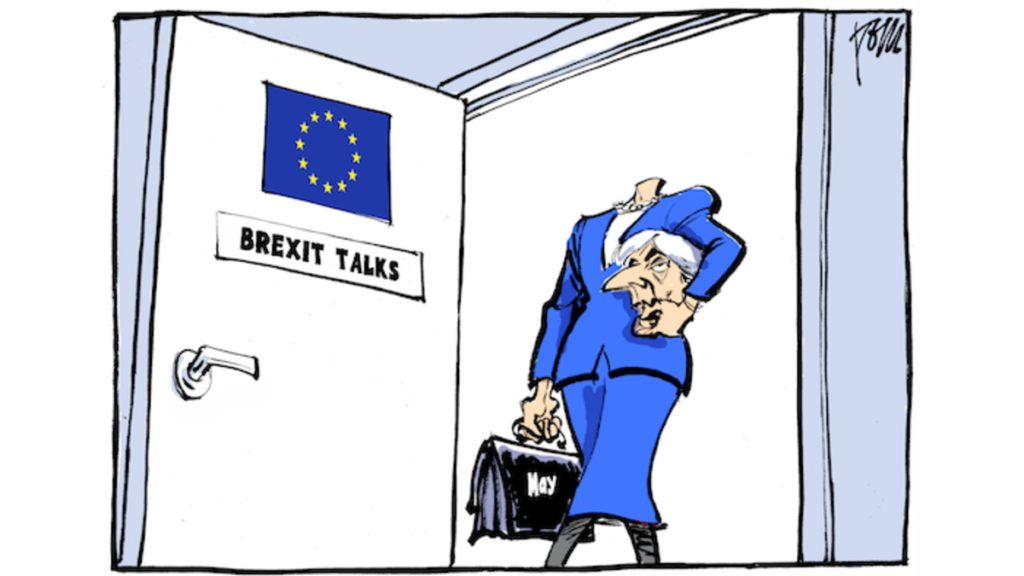
Theresa May is expected to continue talks with EU leaders in the coming days after MPs backed a proposal for her to renegotiate her Brexit deal.
MPs voted 317 to 301 in favour of replacing the backstop – the insurance policy designed to avoid a hard border in Ireland in the event of no deal.
But the EU has said it will not change the legal text agreed with the UK PM.
The PM has invited Labour leader Jeremy Corbyn to discuss a solution, after MPs backed an amendment rejecting no deal.
Mrs May said that, after taking the votes into account and talking to the EU, her revised deal would be brought back to the Commons “as soon as possible” for a second “meaningful vote”.
However, various EU leaders have suggested there will be no revisions to the deal, with European Council President Donald Tusk saying: “The backstop is part of the withdrawal agreement, and the withdrawal agreement is not open for renegotiation.”
French President Emmanuel Macron also said the agreement was “not renegotiable”, while Irish Foreign Minister Simon Coveney said the backstop arrangement remained “necessary” despite the vote.
Mr Tusk added the EU would, however, be willing to look at the political declaration again – the part of the deal that makes a pledge on the future relationship between the UK and the EU – and that the EU would “stand ready” to consider any “reasoned request” for an extension to the leave date of 29 March.
An amendment rejecting a no-deal Brexit also won the support of Parliament on Tuesday – but the vote was not binding, meaning the date for exit remains 29 March.
Nevertheless, Mr Corbyn said as a result of the message from MPs rejecting no deal, he would now meet the prime minister to discuss the next steps.
BBC political correspondent Norman Smith said he understood Mrs May hoped to hold talks on Wednesday with the Labour leader. Mr Corbyn has yet to respond to the invitation.
He had previously refused to meet Mrs May unless she ruled out a no-deal Brexit herself.
On Tuesday Mr Corbyn said: “After months of refusing to take the chaos of no deal off the table, the prime minister must now face the reality that no deal is not an option.”
Five other amendments, including Labour MP Yvette Cooper’s bid to delay Brexit if Mrs May does not get her deal through Parliament, were defeated.
Former first secretary of state Damian Green told BBC Radio 4’s Today programme that the vote would “narrow down” talks with the EU.
“Let’s have some intense negotiation, on that spot,” he said.
He added: “Just as inside the Conservative Party people have had to compromise, Brussels will have to compromise.”
Mrs May is hoping the support for Sir Graham Brady’s amendment to look at alternatives to the backstop gives her a stronger negotiating position with the EU.
The controversial element of the PM’s original plan is the insurance policy to prevent checks on goods and people returning to the Northern Ireland border.
It would effectively keep the UK inside the EU’s customs union, but with Northern Ireland also conforming to some rules of the single market.
It was one of the main reasons Mrs May’s Brexit deal was voted down in Parliament by an historic margin earlier in January as critics say a different status for Northern Ireland could threaten the existence of the UK and fear that the backstop could become permanent.
She told the Commons there was now a “substantial and sustainable” majority of MPs supporting leaving the EU with a deal, but admitted renegotiation “will not be easy”.
The leader of the Democratic Unionist Party in Westminster, Nigel Dodds, said it was a “significant night” and his MPs would work with the prime minister “to deliver the right deal for the United Kingdom”.
But the leader of the SNP in Westminster, Ian Blackford, said that passing the amendment had seen the government “rip up the Good Friday Agreement” – integral to the peace process in Northern Ireland.
Liberal Democrat leader Sir Vince Cable said the Commons had given the prime minister “contradictory instructions to have no deal but pursue a course of action that will lead to a no deal”.
Source: The Express Tribune
The opinions expressed in this article are the author's own and do not reflect the views of LEAP Pakistan or Pakistan College of Law.