- Legal Education and Access Portal

Human Trafficking: The Rights of Victims
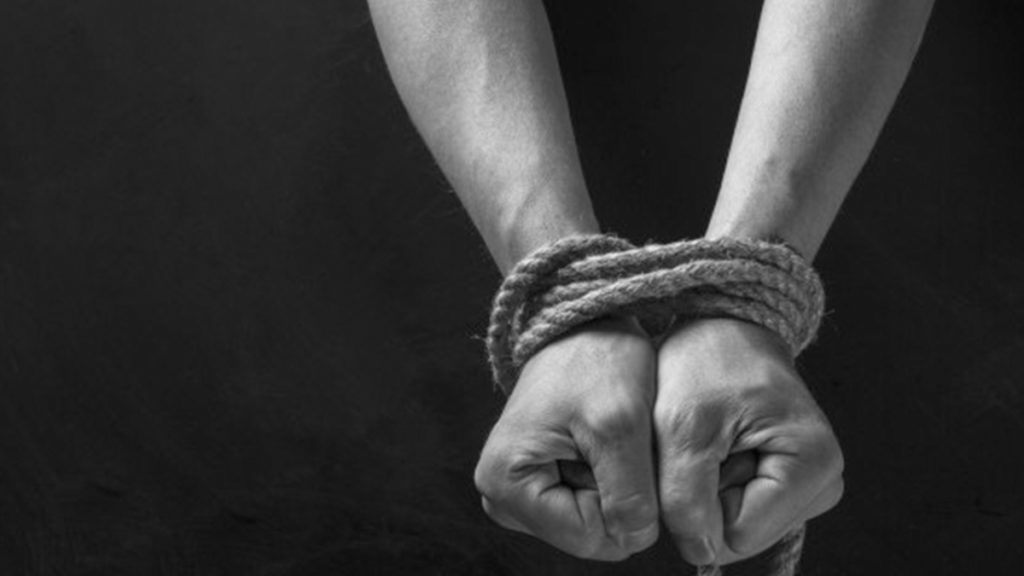
“Slavery is such an atrocious debasement of human nature, that its very extirpation, if not performed with solicitous care, may sometimes open a source of serious evils.” – Benjamin Franklin
“No one shall be held in slavery or servitude; slavery and the slave trade shall be prohibited in all their forms.” Article 4, Universal Declaration of Human Rights 1948
Introduction
When a person is labelled with a price tag, that very person becomes a product. This transformation from person to product compromises the foundation of human integrity. Slavery has existed throughout history and even though it has been abolished, contemporary slavery continues to curtail fundamental human rights till date. No country is free from this social evil. Like many countries, Pakistan in its Constitution expressly states the prohibition of slavery.[2] Yet Pakistan is on the Tier 2 Watch List [3] and despite various measures taken, such as the promulgation of Prevention and Control of Human Trafficking Ordinance 2002, (PACHTO), the number of victims continues to rise. There is very little legislative development in the area pertaining to protection and rehabilitation of victims despite the growing problem.
There is a dire need to introduce a comprehensive legislative bill that addresses problems concerning lack of executive action in provision of rights after victims have been rescued. Various case studies reveal that if a victim does escape the supply chain of the trade, she remains under threat and is actively denied access to justice. Very few are repatriated, and nationals remain in government shelters with little or no hope of rehabilitation. Pakistan’s lack of legislation pertaining to rights is not just a violation of rights, but also of Article 4 of the Universal Declaration of Human Rights 1948 (‘UDHR’). And so in light of the current situation, Pakistan needs a new action plan, and not one that just suppresses trafficking, but one that caters to the victims’ rights. Punishing and suppressing trafficking is a partial solution. Only through the provision of rights will this source of serious evils be eradicated, which negatively contributes to society. This paper focuses on what happens to women after they have fallen victim to the slavery trade and whether the state successfully provides them with rights provided in the Constitution. [4] This paper will also discuss failings of local legislation in providing protection, right to legal aid, how corruption and lack of executive function is exacerbating the situation. It will also look at how after provision of legal aid, victims are denied access to justice and a right to a fair trial. The focus of this section will be The Offence of Zina (Enforcement of Hudood) Ordinance 1979, and finally what the state and judiciary can do to protect victims of this trade.
Where do we stand?
Pakistan is an origin, transit and a destination country where trafficking takes places within and across borders.[5] It ranks 6 out of a 167 countries on The Global Slavery Index with 2.1 million people enslaved.[6] The problem is far from linear: to understand trafficking one has to consider various factors which make people vulnerable to exploitive measures and in turn hinder their basic human rights. Factors that contribute to the problem are lack of education, employment opportunity, awareness of the issue and internal displacement. Trafficking is the third most lucrative organized crime in the world.[7]A great percentage of the trade’s income comes from exploitation of women. Since this paper pertains to adult females, and so the general victim profiles are young girls from poor families, victims of domestic violence and victims from indebted families.[8] Despite the secretive nature of this business, it is not discrete but operates behind other illegal activities, and a staggering increase in crime rate is one of the biggest facilitator of the trade.[9]
Legal Aid and Security
There is no legislation specific to internal trafficking in Pakistan. PACHTO 2002, specific to external trafficking, focuses on punishment for traffickers. For the most part the ordinance turns a blind eye to violation of rights after victims have been recovered. Section 6 is the only part of PACHTO that caters to victims.[10] Furthermore, the Prevention and Control of Human Trafficking Rules 2004 (Herein referred to as Rules) govern how PACHTO is to be exercised. Rules 4[11] and 6[12] are means of providing security and legal aid. However, simply stating these rights in a set of rules does not mean they are given effect. It is noteworthy that the only piece of document which somewhat recognizes these rights specific to trafficked victims is a set of rules, not legislation. Additionally, the recognition only concerns procedure and not express definition of these rights. PACHTO does not take other factors into account such as corruption or what happens after provision of legal aid.
There are around 200,000 Bangladeshi women in Pakistan and some 2,000 women in jails and shelters. Women who manage to escape are arrested and charged with Zina. The evidentiary requirement for the offence is almost impossible to meet and so women are held in jail, without any proceedings for the offence. Since the majority of the victims are illegal immigrants, they usually spend an additional four years in jail.[13] Despite PACHTO and the Rules these women are not given legal aid or access to justice and instead their freedom of movement is violated. There is no evidence to suggest that the government allocates funds for their repatriation as stated under Rule 7(4).[14] This situation seriously hampers the psychological and medical health of all victims. NGO’s have been assigned the duty to provide shelter, food and medical care; very few victims enjoy this. It is evident that PACHTO is not strictly adhered to, and there are blatant violations of the rules set out in PACHTO. Current legislation, specific to trafficking into and out of Pakistan, is ineffective.
There is no legislation to control trafficking within borders, and so the police cannot file a report under any law pertaining to this crime, except for kidnapping for the purpose of prostitution[15] or rape.[16] Like many other local victims, Kulsoom’s case reveals a blatant disregard for her rights. After recovery, Kulsoom’s family tried to record her statement, but visits to the police station only resulted in threats to coerce the family members into dropping the charges. The family was repeatedly advised against pursuing the case because the traffickers were well connected. Even after her statement was recorded and was provided a lawyer by an NGO, the police continued to threaten the family.[17] Upon judge’s orders, provision of a shelter home, governmental or non-governmental, was given to Kulsoom. Despite that, it did not necessarily ensure that she was safe, just like other underprivileged nationals like her. An NGO did provide her with legal aid but that did not guarantee that she had access to justice. Even if PACHTO was to apply to her case, it is unlikely that it would have made a difference since the problem is not just legislative but procedural too. As mentioned earlier, executive function plays a pivotal role here. Unlike Kulsoom, Sabina another victim, opted for an out of court settlement after being deceived into prostitution with marriage. Sabina and both her sisters constantly received threats after two of the four offenders were jailed. Sabina had to settle simply because she was deprived of her right to security despite being sent to a shelter. There is no evidence of legal aid provision in her case. [18] Legislation should extend security not just for the victim but also her family to avoid outcomes like Sabina’s case.
The objective to punish traffickers cannot be severed from the objective to provide victims their rights. Only after victims have a right to legal representation, the state can prosecute the traffickers. So it is safe to say that provision of rights, is in itself a way to suppress and punish trafficking. Both objectives need to be integrated within legislation. If the objectives co-exist, they only address the problem partially, as PACHTO does, rather than in its entirety. Both aims needs to go hand in hand when drafting a comprehensive legislative bill that helps victims post recovery.
After giving effect to rights belonging to all parties, procedure needs to be followed through. While the procedure pertaining to reporting a case or recording a statement has been laid down in the Rules and in the Code of Criminal Procedure, there seems to be a flagrant disregard for it. Burmese and Bangladeshi women are treated like criminals rather than victims who need their statements to be recorded for evidentiary purposes.[19] There have been accounts when the police has refused to file a FIR and rather than facilitating the victims, created more hardship.[20] Failure of executive function is not limited to the police. Personnel in the Federal Investigation Agency have been accused of involvement in the trade.[21] There is a pressing need for checks and balances concerning executive function. Rights on paper, can only be enforced on ground level if all state bodies function in accordance with law. There is a need for new legislation pertaining corruption where the executive should be held at a higher standard to discourage corruption.
Access to Justice and a Right to a Fair Trial
Legal representation should be a bridge for a victim’s right to a fair trial. It is every victim’s right to seek justice for any inhuman treatment or torture she may have suffered before recovery. Given the nature of the trade, women are sexually exploited and those who do seek justice do so for rape and abduction. Protection of Women (Criminal Laws Amendment) Act, 2006 has brought about much needed changes in the Pakistan Penal Code and Code of Criminal Procedure. Zina bil jabr is now an offence under the Code which allows victims to immediately file an FIR and the punishment is life imprisonment or death. The Offence of Zina (Enforcement of Hudood) Ordinance, 1979, still places an unfair evidentiary burden on the victims to bring 4 witnesses to prove the offence which is violation of the constitutional right to a fair trial. Reporting a case usually gets a family unwanted attention because of the social stigma associated with rape. On the face of it, this amendment makes it easier for women to report their case. However statistics do not support this statement. In Punjab, 12,795 registered cases only resulted in 949 convictions. Reported cases have increased over time yet conviction rates remain low.[22] As stated earlier, executive function plays a fundamental role in enforcement of rights. Police has been accused of using delaying tactics like accusing women of lying about their rape in such cases, which makes it harder to collect crucial evidence.[23]
Laws are in place, but there is a need for new legislation to bring about procedural changes to give women access to justice and a right to a fair trial. Circumstantial evidence cannot be given the same weight as medical and scientific evidence. Rape cases should be dealt by female officers because of the sensitive nature of the situation. These officers need to be trained on how to procure and record evidence. If this step is carried out successfully, victims should face no obstacles during trial. Legislation should make medical examination of the victim and DNA testing compulsory. This works in the favor of the victim and the accused when executing justice. Even though victims of human trafficking are less likely to falsely blame the defendant, DNA evidence will prove to be an effective safeguard from wrongful prosecution. This task should be appointed to a separate medical body, fully funded by the state and accountable to the courts. In Kulsoom’s case the lower staff at the hospital demanded money from the family in order to proceed with the medical exam.[24] With a separate medical body, under privileged families will not have to pay any person in order to obtain evidence for trial. It will also reduce chances of evidence tampering and any impediment in obtaining the medical report.
The Council of Islamic Ideology (CII) has rejected DNA evidence as primary evidence.[25] Law is evolutionary. It will always cater to changes in society and economic activity. It should however retain its single most important purpose, to do justice. And justice is the thread running throug Islam[26] and law. Provided we retain the essence of Islam, which is giving effect to justice, technological and scientific advancements should not be seen as a threat, but a furtherance of justice. And once the DNA requirement has been made compulsory, the 4 witness requirement should be abolished.
Conclusion
Having assessed the violation of human rights in this trade, Pakistan needs to take necessary steps to rectify legislative and procedural failures in order to be taken off the Tier 2 Watch list. The first step is to sign and ratify the Protocol to Prevent, Suppress and Punish Trafficking in Persons Especially Women and Children, 2000 and to work towards the objectives set out in the protocol. Trafficking is a transnational crime, and until neighbouring states do not cooperate to control trafficking, the aim cannot be achieved. The next step is to introduce new legislation that prevents both internal and external trafficking, in amalgamation with giving effect to fundamental human rights of victims of this trade. There needs to be strict adherence to new laws pertaining to executive function which punish officials guilty of corruption. Most of all the state needs to adhere to the law of proportionality. Steps taken must be proportionate to the desired aim which in Pakistan’s case is take bold steps to eradicate this social evil.
The state must set up organisations that work towards spreading awareness about trafficking and its veiled nature. No victim consents to slavery but rather to better economic opportunity. People need to be educated about the dangers of this trade and how to protect members of their family most vulnerable to this trade – women and children. The state needs to work towards encouraging trade and economic activity since the poor are frequently exploited and it must ensure that access to justice is not determined by a class system.
Anon., 1973. Constitution of Pakistan. [Online]
Available at: http://www.pakistani.org/pakistan/constitution/part2.ch1.html
[Accessed 2nd March 2016].
Aurat Foundation, 2012. Internal Trafficking of Women and Girls in Pakistan. [Online]
Available at: http://www.af.org.pk/gep/images/Research%20Studies%20%28Gender%20Based%20Violence%29/study%20on%20trafficking%20final.pdf
[Accessed 3rd March 2016].
Gonzalez, E., 2013. Seton Hall University eRipository. [Online]
Available at: http://erepository.law.shu.edu/student_scholarship/227
[Accessed 29th Febuary 2015].
Guedes, C., 2014. Socio-economic impact of Migrant Smuggling and Human Trafficking in Pakistan, s.l.: UNODC.
Habib, Y., 2011. A Struggle Against Human Trafficking. [Online]
Available at: http://www.pakistantoday.com.pk/2011/08/15/city/lahore/the-struggle-against-human-trafficking/
[Accessed 29th Febuary 2016].
Ilyas, F., 2015. Dawn. [Online]
Available at: http://www.dawn.com/news/1197650
[Accessed 4th March 2016].
Index, T. G. S., 2014. The Global Slavery Index. [Online]
Available at: http://www.globalslaveryindex.org/findings/
[Accessed 29th Febuary 2016].
Karim, S., 2014. The Express Tribune. [Online]
Available at: http://tribune.com.pk/story/782953/human-trafficking-in-pakistan-not-for-sale/
[Accessed 6th March 2016].
Labour Watch Pakistan , 2013. Labour Watch Pakistan. [Online]
Available at: http://labourwatchpakistan.com/fia-arrests-three-staffers-for-human-trafficking/
[Accessed 4th March 2016].
Munir, R., 2012. Uqaab Pakistan Think Tank. [Online]
Available at: http://pakistanthinktank.org/tag/human-trafficking-in-pakistan
[Accessed 7th March 2016].
Mussadaq, M., 2014. The Express Tribune. [Online]
Available at: http://tribune.com.pk/story/787946/seeking-justice-only-one-rape-conviction-in-the-last-five-years/
[Accessed 7th March 2016].
State, U. D. o., 2015. US Department of State Diplomacy in Action. [Online]
Available at: http://www.state.gov/j/tip/rls/tiprpt/2015/243366.htm
[Accessed 29 Febuary 2016].
[2] (Anon., 1973) Article 11
[3] (State, 2015)
[4] (Anon., 1973)
[5] (Guedes, 2014)
[6] (Index, 2014)
[7] (Karim, 2014)
[8] (Guedes, 2014)
[9] (Gonzalez, 2013)
[10] Section 6 reads :
“Compensation etc. to the victim. —The court trying an offence under this Ordinance may where appropriate direct:
- the competent authorities of the Government, at any stage of the trial to allow or extend the stay of the victim in Pakistan till such time, as the court deems necessary;
- payment of compensation and expenses to the victim in accordance with section 545 of the Code;
- Government to make arrangements for the shelter, food and medical treatment of victim being an unaccompanied child or a destitute woman.”
[11] Rule 4 reads :
. “Establishment of shelter homes and security arrangements. –
The Government shall establish shelter homes for safe custody of the victims and shall also make necessary security arrangement for the protection of the victims in the shelter homes whether established by the Government or the Non-Governmental Organizations.”
[12] Rule 6 reads:
Legal assistance to the victim.-
- The Government shall and the Non-Governmental Organizations may provide necessary legal assistance to the victim during trial of the case and other legal proceedings under the Ordinance.
- The Government shall allocate appropriate funds for providing legal assistance to the victims.
[13] (Munir, 2012)
[14] Rule 7 (4) reads:
“The government shall establish special funds for the repatriation of the victim.”
[15] Act XLV of 1860 Section 371A, 496A, 493A
[16] Act XLV of 1860 Section 375
[17] (Aurat Foundation, 2012)
[18] (Aurat Foundation, 2012)
[19] (Munir, 2012)
[20] (Ilyas, 2015)
[21] (Labour Watch Pakistan , 2013)
[22] (Mussadaq, 2014)
[23] (Mussadaq, 2014)
[24] (Aurat Foundation, 2012)
[25] (Tunio, 2014)
[26] “We sent our Messenger with clear signs and send down with them the Book and Measure in order to establish justice among the people…” (The Holy Quran 57:25)
The opinions expressed in this article are the author's own and do not reflect the views of LEAP Pakistan or Pakistan College of Law.