- Legal Education and Access Portal

Govt to send 2m children to schools through BISP

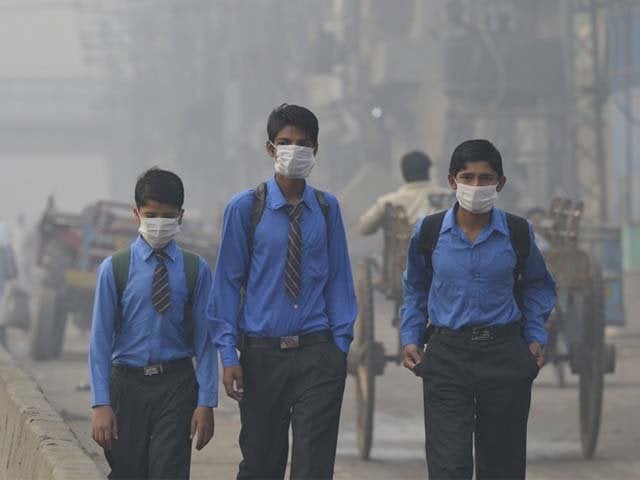
Islamabad – The government, through its Benazir Income Support Programme (BISP), has a target to send two million children to school by 2018.
The other objective is to improve grassroots social mobilisation capacity through partnerships with provincial governments and NGOs.
Highlighting outlook for year 2017-18 and beyond, official sources on Sunday said in line with government’s resolve to run BISP on transparent and efficient lines, the future focus is attuned to regular revalidation/recertification of beneficiaries in order to capture transitional poverty. Successful completion of Pilot Phase of NSER and going for national roll out and shifting of all beneficiaries from traditional to scientific payment mechanism in future is also being focused.
The sources said the other aims are to consolidate partnership with provinces to integrate federal social protection schemes with provincial programmes to achieve equity for the poor and vulnerable and facilitate government in using BISP Registry for targeted subsidy provision under other sectors and elimination of non-targeted subsidies.
Regarding target for 2017-18 and 2018-19, the sources said these are successful completion of National Socio-Economic Registry (NSER) and implementation of new data, implementation of Biometric Verification System (BVS) all over the country and expansion of Waseela-e-Taleem in 50 districts and achieving enrolment target of 1.6 million.
The other targets are integration of BISP beneficiaries in other complementary initiatives of federal and provincial governments and successful implementation of World Bank funded $100 million National Social Protection Project (NSPP) during 2017-2020. The sources said resent government had increased BISP budgetary allocations from Rs70 billion in 2012-13 to Rs75 billion in 2013-14 which was subsequently enhanced to Rs97 billion in 2014-15 and Rs102 in 2015-16 while for 2016-17, the allocation was further enhanced to Rs115 billion.
The quarterly cash grant has been gradually enhanced from Rs3000 per family to Rs3600 in 2013-14, Rs4500 in 2014-15, Rs4700 in 2015-16, and Rs4834 in 2016-17.
The number of beneficiaries has also increased from 3.73 million in 2012-13 to 5 million in 2014-15. At present, number of beneficiaries is around 5.42 million. BISP is also following path of automation and 97 per cent of beneficiaries are being paid through mode of technology.
Successful launch of pilot phase of NSER and completion of Desk Approach with 89 per cent overage. Successful start of BVS in 43 districts and this system will be expanded on gradual basis.
BISP has also inducted an increase in per adult equivalent monthly food consumption by Rs69.
Moreover, for graduation of beneficiaries, Akhuwat through Chief Minister’s Self Employment Schemes of Punjab & Gilgit-Baltistan and through Prime Minister’s Interest Free Loan Scheme has provided interest-free loans to 76,196 beneficiaries.
Source: The Nation
The opinions expressed in this article are the author's own and do not reflect the views of LEAP Pakistan or Pakistan College of Law.