- Legal Education and Access Portal

The Enforcement Gap: Law, Accountability, and Child Domestic Workers in Punjab
As the Punjab Domestic Workers Act 2019 (PWDA) establishes minimum requirements for wages, working hours, rest, and leave, and also officially recognizes domestic workers, it is often considered a milestone. Countless reports of sexual assault and torture against child domestic workers in Punjab show that legal recognition does not always provide protection. The argument that this article creates is that while PWDA is essential, it is not enough because of informality, low registration, limited awareness, household workplaces, and inaccessible remedies that can hinder statutory rights. The article comes to a conclusion with a reform plan focused on household-appropriate compliance models, specialized low-cost remedies, useful registration, and a child-protection-first approach to child domestic labour. (docs.nchr.gov.pk)
However, Pakistan lacks a single regulation that uniformly protects domestic workers across the country, even as domestic work is common, and many households employ at least one ‘maid or servant’. PWDA 2019 was welcomed as it recognizes domestic workers and outlines protections, such as minimum wage standards, paid weekly rest, work hour limitations, paid sick leave, festival holidays, and overtime compensation.
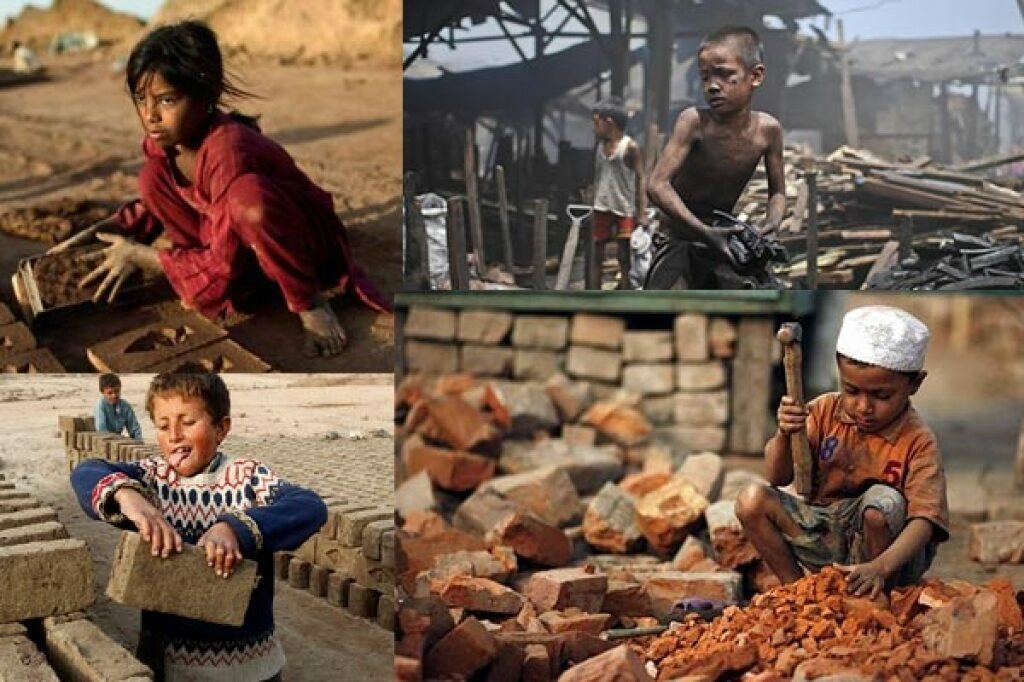
However, giving domestic work legal recognition still has not solved troubling issues when it comes to children. In a 2023 letter, the National Commission for Human Rights (Punjab) referred to survey findings showing that about one in four Pakistani households that employ domestic workers hire children between the ages of 10 and 14. It is estimated that more than 500,000 children are working as domestic labourers, and it is warned that many of them face psychological, physical, and even sexual abuse. (docs.nchr.gov.pk) These numbers are not just alarming statistics about child rights; they raise a serious question about whether labour laws in Punjab are capable of protecting the most vulnerable workers, especially in private homes, which are among the hardest workplaces to monitor and regulate.
Pakistan’s labor framework provided insufficient recognition to the domestic workers for many years, depriving them of protections more commonly found in the official sector. The exploitation and abuse go unreported, since domestic work takes place in private homes, which are rarely treated as commercial workplaces. Regulations designed for factories, such as routine inspections, open records, and oppressive conditions, do not apply to household labour because of the “home-as-workplace” reality, where workers may be unreachable and documentation inadequate.
According to Shafeeq, Naz, and Awan, paid domestic work is largely ignored and mistreated in Pakistan’s informal economy. They state that both employers and employees need legally binding agreements.(ojs.jdss.org.pk) Similarly, according to a study from Lahore by Zulfiqar, poor salaries and disrespect are also linked to a lack of negotiating power and informal work relations, suggesting that even in cases where rights are present, workers may not be able to “activate” them. (cupola.gettysburg.edu) The lack of legislation and the weakness of enforcement and remedies are what cause the vulnerability of domestic workers.
Provincialization adds another layer. In other jurisdictions, domestic servants are not protected by Punjab’s legislation, which is exclusively applicable within Punjab. The Islamabad Capital Territory Domestic Workers Act 2022 is one example of legislation that other jurisdictions have started to authorize. Enforcement issues continue to arise when informality and domestic privacy are not addressed. This represents a larger governance issue with regard to policing work done in private homes, which makes Punjab’s experience more than just a provincial one.
PDWA 2019, as a rights-granting law, recognizes domestic workers as employees, establishes minimum requirements for working hours and rest, mandates compliance with minimum salaries, and supports overtime pay. (WageIndicator Foundation) To establish a public standard of decent work in place of tradition and discretion, “whatever the employer decides”, these rights are significant.
Registration is a key component of PDWA 2019’s design. The majority of domestic workers are essentially excluded from legal protection because the Act requires registration, and registration rates are incredibly low when compared to the actual number of workers. This is important because registration serves as a useful link between enforcement and standards. Without registration, workers lack evidence to support wage or hour claims, regulators lack a reliable basis for planned oversight or outreach, and social-protection links become difficult to expand. Low registration essentially forces PDWA 2019 to return to symbolism: rights are there, but they are difficult to enforce.
The employment of minors under a certain age is nevertheless common, and the legislation lacks regular, straightforward procedures for identifying and reporting child labor in home settings. This conflict is crucial, since restrictions only work when combined with child protection programs, financial assistance that reduces families’ dependence on children’s earnings, and reliable oversight. Otherwise, even in situations where hiring is informal and concealed within homes, children are nevertheless employed in practice, even though they are legally prohibited from doing so.
PDWA 2019 assumes that workers can demand formal contracts and minimum pay, because workers fear losing their jobs and have few safe alternatives. The general informality of domestic employment leads to subpar working conditions due to a lack of formal contracts, set hours, standardized pay, and grievance procedures. Zulfiqar’s research explains why this presumption is incorrect: Workers frequently lack the power to transform legal requirements into actual compliance in situations where the job relationship is informal and unbalanced. (cupola.gettysburg.edu)
A second structural barrier is remedy design. For domestic worker issues, Punjab lacks specialized committees or fast-track forums, and regular procedures can be inconvenient, costly, and frightening for low-wage workers. Employers face little discouragement, and illegality becomes normalized in the absence of genuine, affordable remedies, which is why it counts even in “non-violent” issues like unpaid overtime, salary deductions, and deprivation of rest.
The third obstacle is awareness. Even educated employers and a large number of domestic workers are not aware of PDWA 2019. Awareness is not a cosmetic; it is essential for compliance, complaints, and registration. Legal standards may never be met when domestic work is viewed as a private relationship rather than a regulated occupation. In theory, domestic workers may claim harassment rights under the Protection Against Harassment of Women at the Workplace Act of 2010, but in reality, there are no institutional frameworks (such as workplace committee regulations) that may be used in household labor. This observation also applies to child domestic work: even in cases where laws “exist” in theory, children have the least access to formal complaint channels.
Only when legal rights enhance accountability and lessen serious damages do they have any real significance. The following examples show how institutional fragmentation, power imbalances, and household invisibility can undermine preventative protection. A national outcry was sparked when Reuters revealed in June 2020 that eight-year-old Zohra Shah had died in Rawalpindi from alleged torture at the hands of her employers. It also spurred calls for reforms to child labor laws. (Reuters) The wounds indicated chronic maltreatment, and the case served as a focal point for efforts to ban child labor. According to PDWA 2019, the case showcased the limitations of standard-setting without preventive enforcement: even though a provincial framework seemingly recognized domestic labor as work deserving of protection, a kid might be engaged in a family, abused, and tragically harmed.
Dawn revealed in July 2023 that the wife of a civil judge was accused of torturing a 15-year-old domestic worker named “Rizwana,” who was then moved to the intensive care unit. (Dawn) The case demonstrates how elite authority and domestic privacy interact: abuse took place within a home, and accusations linked a household with social clout, increasing the cost of reporting and deteriorating trust in accountability. Additionally, the criticism of “illicit legality” goes beyond theory: even if there is a law, a vulnerable worker may still suffer harm in situations where enforcement is challenging, and opposition is insufficient.
In the Hanjarwal neighborhood of Lahore, a man and his spouse were detained in April 2025 after reportedly beating their 10-year-old maid, Sonia, till she died, according to Dawn. This incident highlights under-reporting and the challenges impoverished families encounter while navigating complaint procedures. (Dawn) Once more, the state took action after deadly harm occurred rather than before, indicating a reactive approach in the larger protection foundation.
In January 2026, an FIR was filed, according to Dawn, saying that a 13-year-old girl working as a minor maid in the Sadiqabad neighborhood of Rawalpindi had been repeatedly raped and tortured. (Dawn) The NCHR’s caution that child labor often entails both physical and sexual abuse is echoed in this report. (docs.nchr.gov.pk) It also demonstrates the structural risks of household-based employment for kids, which include physical control, social and academic isolation, and obstacles to reporting.
Three systemic patterns are consistent across situations. The argument that exploitation continues to take place secretly in private homes is supported by the fact that invisibility delays detection in three ways: abuse becomes visible when a child is hospitalized, a death occurs, or the case becomes publicly sensational. Second, accountability is weakened by power imbalances: the economic reliance of domestic workers and the social standing of employers influence whether or not abuse is reported and investigated. Third, institutional fragmentation undermines prevention because these instances lie at the alliance of criminal law, labor regulations, health services, and child protection agencies. In the absence of coordinated pathways, each institution may consider the issue as outside its purview until a catastrophe forces action.
The ILO Domestic Workers Convention (No. 189), a commonly used standard for protecting domestic workers, has not been approved by Pakistan. Convention No. 189 recognizes domestic work as legitimate employment, calls for fair terms and conditions of work, protection from abuse and harassment, and access to complaints and dispute resolution mechanisms comparable to those available to other workers (United Nations). The standard is relevant for Punjab’s institutional architecture because it views the unique circumstances of domestic work (isolation, cohabitation, and informality) as justifications for tailored enforcement rather than for weakened rights. The convention’s focus on protection from abuse highlights the importance of Punjab’s governance architecture in situations when child domestic labour is associated with sexual violence and torture.
The benefits promised by the Punjab Domestic Workers Act 2019 (PDWA) will remain hypothetical unless enforcement is redesigned to accommodate the realities of domestic workplaces. A focused reform plan should focus on four interventions. First, make registration practical and beneficial; make worker registration easier through mobile and community-based assistance by connecting it to real advantages like emergency assistance, access to services, and wage documentation. Low registration rates currently undermine coverage, visibility, and the delivery of formal protection.
Second, Punjab should develop specialized and affordable solutions by creating a specific venue for domestic employment, such as a tribunal track, a specialised bench, or an ombudsperson model, to resolve wage, hour, and dismissal complaints with legal assistance. Third, child domestic labour should be considered a child protection emergency rather than being treated as a routine labour violation. To reduce the economic pressure that drives child placement in domestic work, proactive identification, safe removal procedures, rehabilitation, and targeted family support should be implemented, as supported by credible evidence of its prevalence and abuse risk. (docs.nchr.gov.pk). Lastly, compliance mechanisms must be created to adapt to the private-home setting. Instead of depending on factory-style inspection models, enforcement should make use of household-appropriate models, such as off-site verification of employment documentation, digital wage records, safe interviews held away from the vicinity of employers, and coordinated detection referrals between child protection and police authorities where a plausible risk of violence or coercion exists.
As it recognizes domestic employment as work and establishes minimum labour standards, PDWA 2019 remains a crucial provincial move. (WageIndicator Foundation) However, repeated reports of severe abuse against child domestic workers in Punjab, including allegations of repeated sexual assaults and torture, showcase how legal recognition can turn into symbolic legality when enforcement is weak, household-workplaces remain largely unmonitored, and remedies remain mostly inaccessible to vulnerable workers. Transforming the Punjab Domestic Workers Act, 2019 (PDWA 2019) into effective protection requires implementing strategies that go beyond current statutory standards: a quick, low-cost dispute-resolution system, household-appropriate compliance models, and a functional, incentivised registration system. Most importantly, it requires integrated child protection responses that are capable of preventing tragedies rather than responding after they have occurred, through early identification, support services, and safe removals. International benchmarks such as the ILO Domestic Workers Convention, 2011 (No. 189) reinforce this direction by affirming that domestic workers’ rights should be comparable to those of other workers, while enforcement and remedies should be tailored to the distinctive conditions of household labour. (United Nations).
Bibliography:
Primary Sources:
Legislation
Pakistan, Punjab Domestic Workers Act 2019
https://labour.punjab.gov.pk/system/files/the-punjab-domestic-workers-act-2018-docx-pdf_2.pdf (accessed 18 February 2026)
Pakistan, Islamabad Capital Territory Domestic Workers Act 2022
https://pakistancode.gov.pk/english/UY2FqaJw1-apaUY2Fqa-apaUY2Npa5lqag%3D%3D-sg-jjjjjjjjjjjjj (accessed 18 February 2026)
International Instruments
International Labour Organization, Domestic Workers Convention, 2011 (No 189)
https://www.un.org/en/development/desa/population/migration/generalassembly/docs/globalcompact/ILO_C_189.pdf (accessed 18 February 2026)
Secondary Sources:
Journal Articles
Shafeeq N, Naz F and Awan R, ‘Doing the Dirty Work: The experiences of female domestic workers in Pakistan’ (2022) 3(II) Journal of Development and Social Sciences
https://ojs.jdss.org.pk/journal/article/view/102/9 (accessed 18 February 2026)
Zulfiqar A, ‘Invisible Labor: Job satisfaction and exploitation among female domestic workers in Pakistan’ (2021) 5(1) Gettysburg Social Sciences Review
https://cupola.gettysburg.edu/cgi/viewcontent.cgi?article=1077&context=gssr (accessed 18 February 2026)
Reports and Websites
National Commission for Human Rights (Punjab), ‘Child domestic labour in Punjab – media awareness (letter)’ (14 November 2023)
https://docs.nchr.gov.pk/pdfs/Child-Domestic-Labour-in-Punjab-Media-Awareness.pdf (accessed 18 February 2026)
WageIndicator Foundation, ‘Domestic Workers Act 2019’ Paycheck.pk
https://paycheck.pk/labour-laws/domestic-workers-in-pakistan (accessed 18 February 2026)
Newspaper Articles
Dawn, ‘Couple held for torturing minor maid to death’ (13 April 2025)
https://www.dawn.com/news/1903928 (accessed 18 February 2026)
Dawn, ‘FIR registered over alleged rape of minor maid’ (14 January 2026)
https://www.dawn.com/news/1966769 (accessed 18 February 2026)
Dawn, ‘Maid tortured by judge’s wife shifted to ICU’ (26 July 2023)
https://www.dawn.com/news/1766805 (accessed 18 February 2026)
Reuters, ‘Eight-year-old maid’s death spurs calls for child labour reform in Pakistan’ (5 June 2020)
https://www.reuters.com/article/us-pakistan-children-slavery/eight-year-old-maids-death-spurs-calls-for-child-labour-reform-in-pakistan-idUSKBN23C37D (accessed 18 February 2026)
The opinions expressed in this article are the author's own and do not reflect the views of LEAP Pakistan or Pakistan College of Law.